

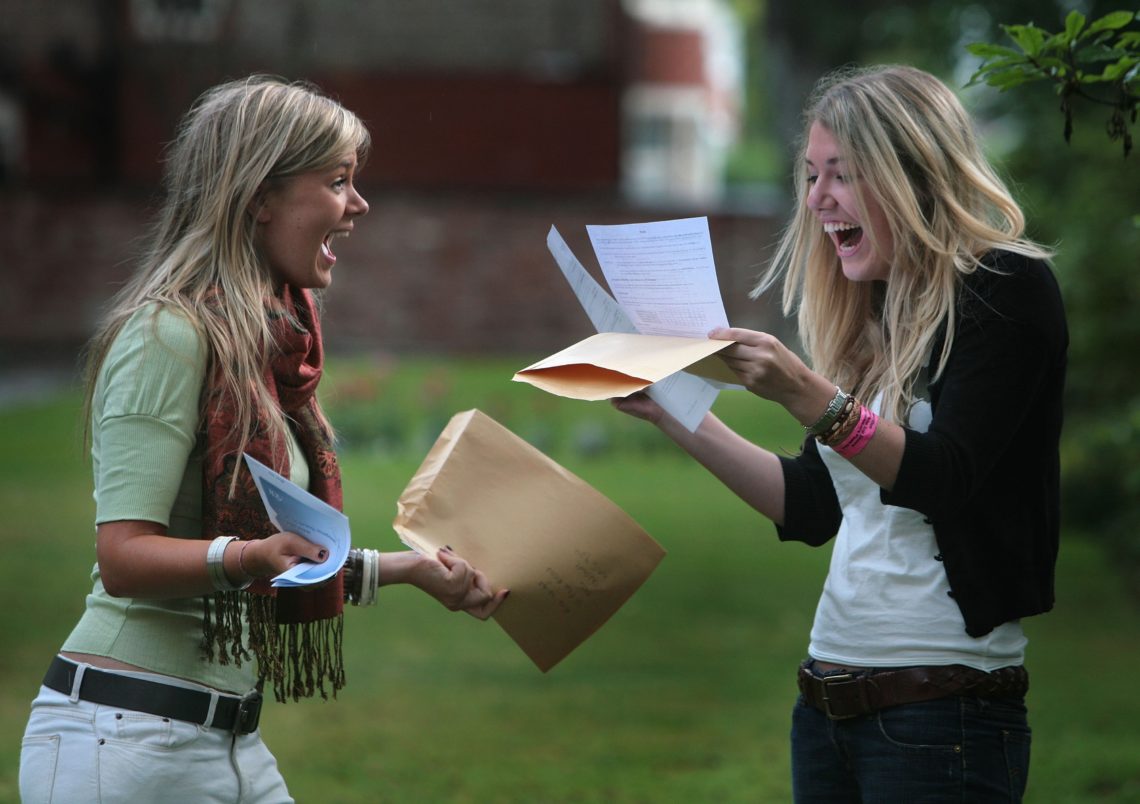


The latest Oqual A-Level results day stats show the South of England had the highest rates of students getting A and A* grades.
According to the latest statistics from Oqual the largest proportion of students getting A and A* on today’s A-level results day were in Kent, Surrey and Sussex.
A-Level Results Day Stats
This is the first year since 2019 that pupils have sat exams and formal assessments and have not been graded by teachers – forgetting the awkward 2020 Gavin Williamson algorithm fiasco.

In 2020 and 2021 87.5% and 88.2% of pupils, respectively gained a grade C or above in their A-Levels, compared to 82.1% this year.
On average, across England, 35.9% of pupils earned A and A* grades this year – this is a dropped from 2020 and 2021 when 38.1% and 44.3% of students, respectively earned these grades.
However, this year is still a huge increase by over 10% when 25.2% of students in England got A and A* grades, in 2019.
Divide in A-Level results
But, when grades are broken down into regions it shows proportionally more students in the south of England received A and A* grades, compared to those in the north.
The results show that 17.1% of entries in London, and 16.6% of entries in the South East of England attained A* grade, compared to just 11.2% in the North East.
London, Buckinghamshire, Hertfordshire, Surrey, Rutland, East Sussex, and Cambridgeshire are among the southern counties where more than 39% of students attained A and A* grades. Compared to the likes of Cumbria, Merseyside, Staffordshire and Northumberland where their percentages were all 32% or lower for the proportion of students attaining the higher grades.
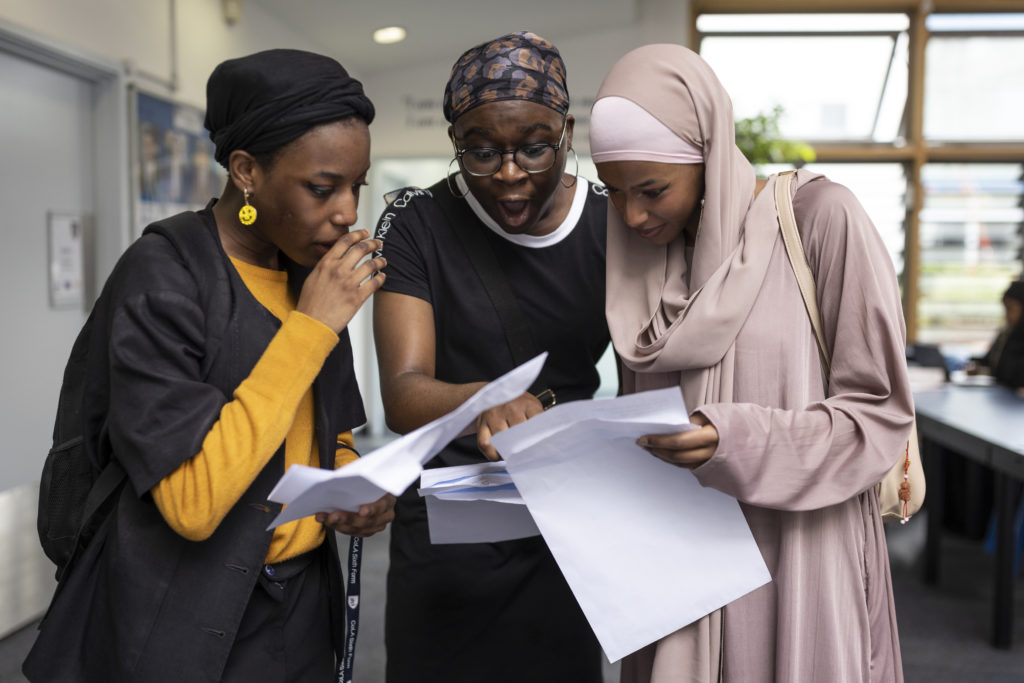
There is also a gender divide among results as among the A-Level students who sat three A-Level subjects and attained three A* grades, 57% of those were female and 43% were male.
The i paper reports when Education Secretary James Cleverley was asked if it was fair to treat all students the same when there was a significant regional disparity on the impact of Covid on teaching – after reporting on the differences – the secretary said he they have done it in a ‘progressive and fair way.’
He said: ‘The thing that we have got to do is get back to school-based teaching and exam-based assessment.
‘This year we’ve taken a step towards normality. We have still had mitigations in place, there are adaptations during the exam and obviously we have injected a lot of money into making sure there is catch-up tuition which will probably benefit the cohorts coming in after this one, to be fair.
‘But nevertheless, this is what the teaching profession, the students, this is what employers and institutions want. We have done it in a progressive and fair way.’