

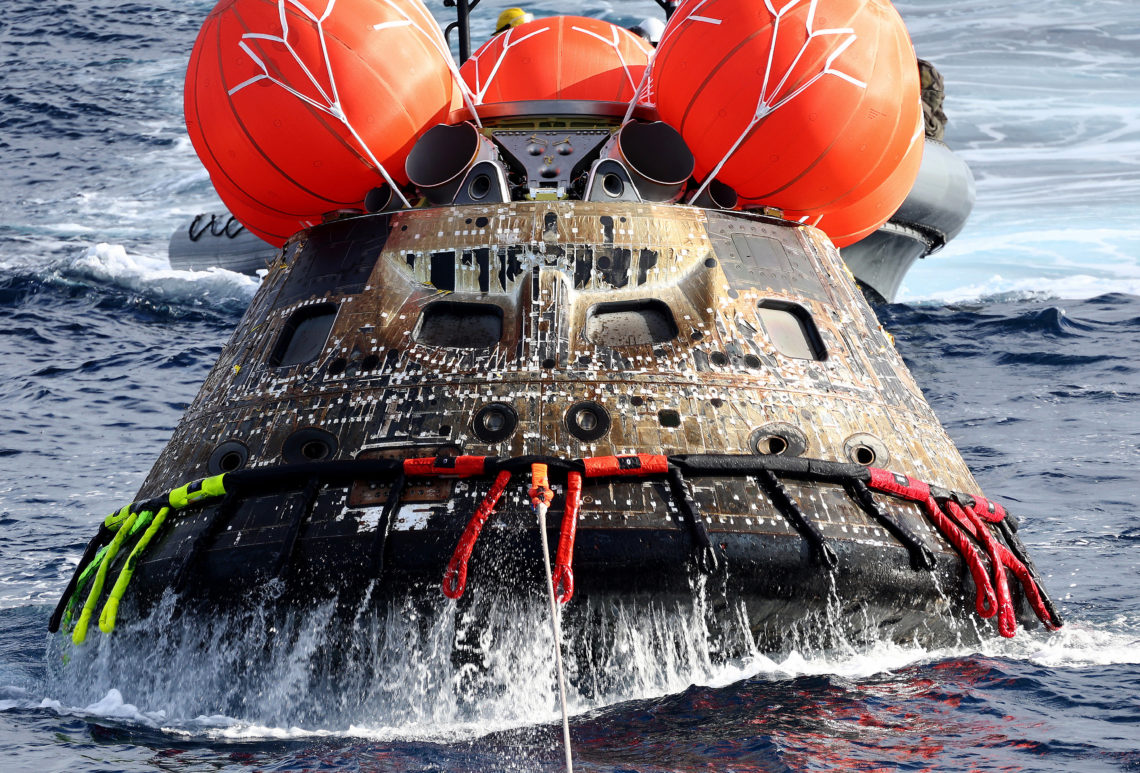


In some of the final science and space news of the year, NASA’s new space rocket Artemis 1 returned to earth. After an incredibly successful first flight which lasted 25 and a half days.
After struggling to first send the rocket into space, scrubbed launches and a hurricane. Artemis 1 blasted off on November 16 from Kennedy Space Center at Cape Canaveral in Florida.
The new rocket, the Space Launch System, is the biggest rocket NASA has built since the Saturn V of the Apollo missions era. It currently stands as the most powerful rocket of the world.
The Artemis mission have one specific goal: return humans to the moon for the first time since the Apollo missions. And with the success Artemis 1 had we are now closer than ever to that goal.
Artemis 1 sets new records
The Artemis 1 mission set some incredible records whilst in space.
The unscrewed Orion module performed incredibly well during the entire mission. And it clocked an incredible 1.3 million miles during its journey. The spacecraft flew 268,554 miles away from earth. This is the farthest any crew rated vehicle has ever traveled.
And when reentering into the earth’s atmosphere, the Orion capsule experienced temperates of up to 5,000 degree Fahrenheit.
Upon reentry it reached speeds of Mach 32 which is the fastest return velocity in history for a spacecraft carrying passengers.
Return to the moon
Artemis 1 did some beautiful flybys of the moon.
And with that came some stunning photos. It’s been over 50 years since Neil Armstrong first set foot on the moon. Yet the pictures Artemis 1 took of the moon reminded us that the moon hasn’t really changed in 50 years. It is still filled with craters, and mountain ranges.
But what it reminded us is that we are so close to our goal of returning to the moon and that the future of space exploration is bright.
See also: How Long Is The Shortest Day 2022 And When Is It?
Orion’s heat shield passes the test
One of NASA’s main objectives with this mission was to see if Orion’s heat shield could withstand the high speeds and high heat conditions when returning to earth.
Returning from deep space is a different story than returning from low-Earth orbit.
The capsule faces speeds and temperate that are much more significant than low earth orbit reentries. Therefore, the Orion capsule needed to withstand those before real crews flew aboard Orion.
The Orion capsule came home safe and sound after entering the earth’s atmosphere at 25,000 mph and the temperature on the heat shield reached 2,800 degrees Celsius.
Whilst we are still in the early days of analysing results, the data brought home promises to be successful.
Retrieval of Orion capsule
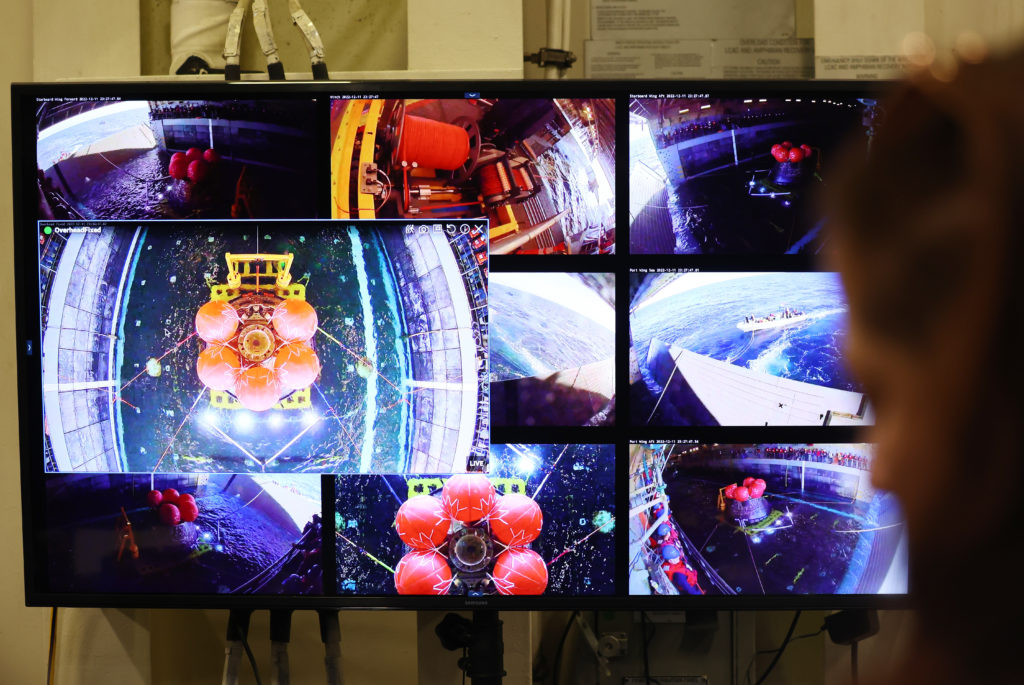
The Orion capsule, splashed down in the Pacific Ocean at 9.40 am PST on December 11. Whilst engineers retrieved data from the rocket throughout its journey into space it was crucial for the capsule to be retrieved.
It will provide information needed to inform future spaceflights.
Moreover, the mannequins inside the capsule will be tested. NASA will test to see how much radiation they faced during the journey and how they were affected.
Safe retrieval of the capsule was an essential test as it allowed NASA to work on its recovery techniques and procedures. This will be critical for the recovery of the future crews.
Technicians will also reuse parts of the spacecrafts such as the avionics systems for future flights.
Future
For a first flight with a new rocket the Artemis 1 mission was hugely successful. However, there are still some issues NASA needs to work on. For example, on November 23, engineers at NASA lost contact with the rocket unexpectedly. NASA engineers lost contact with the spacecraft for over 45 minutes.
Moreover, there were a few other issues that NASA needs to tweak. NASA had to scrub two of its first launches due to some technical difficulties. Rolling the rocket in and out to the launch pad is a long and extensive process. NASA cannot afford to be fixing these difficulties when astronauts are on board and ready to make history.
Another goal the spacecraft had and did not go as planned was delivering small satellites into space. Whilst the payloads were successfully deployed, many of them failed to turn on.
The SLS was meant to be delivering 10 cubists into space. Out of those ten only six of them are functioning as planned. The other four failed shortly after launch. Space is hard and deep space will be even more challenges.
Whilst there were some hicks with the mission, the main objectives of the mission were achieved successfully.
Read next: How Social Media Has Changed The Way We View Space Travel