

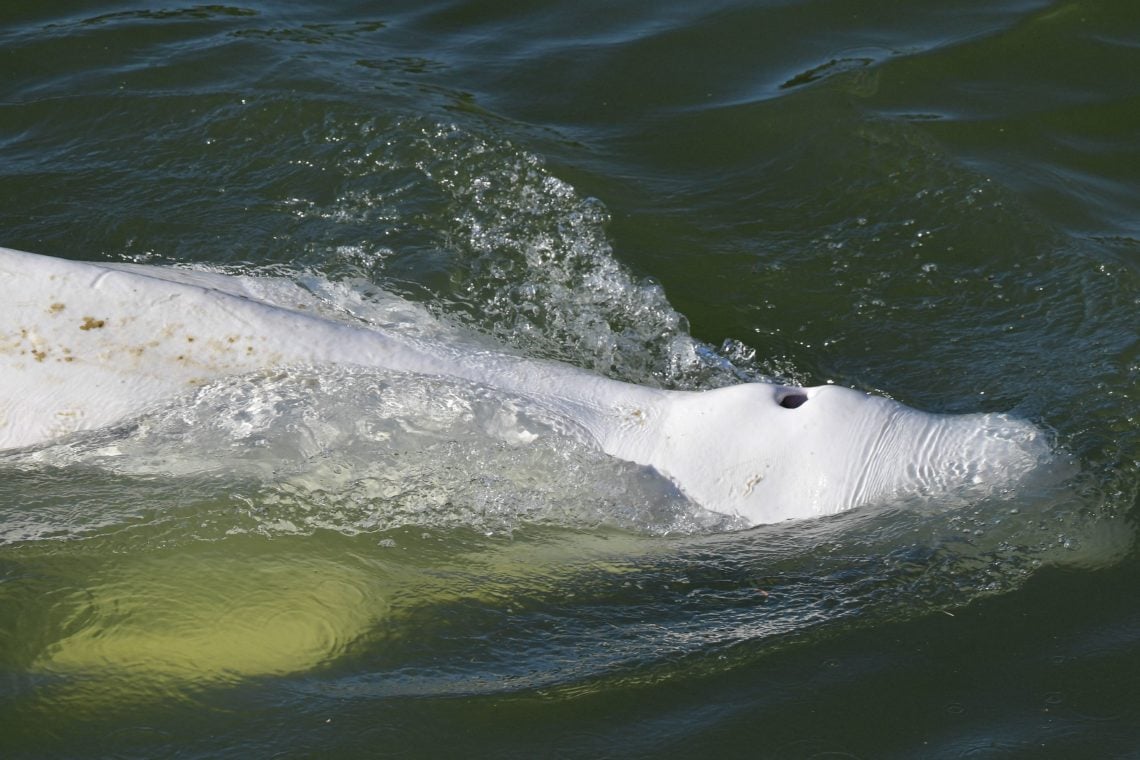


Last week, a beluga whale was spotted swimming in the green waters of the Seine, in France. The whale was very far from its home in the waters of the Arctic Sea. When spotted, the whale seemed in rather good condition but, after closer inspection, it was found that the whale was not eating and was therefore very thin.
Indeed, the river of the Seine is not a beluga whale’s normal habitat and it struggled to feed itself. The non-profit organisation Sea Shepherds recognised their first goal as getting it fed. They gave him fish and vitamins but the whale did not feed. Sea Shepherds then took the decision to extract him from the freshwater lock he was stuck in. However, they noticed that he was quickly deteriorating and therefore took the decision to euthanise him.
What happened to the beluga whale in the Seine?
On August 3, the organisation Sea Shepherds located the beluga whale in the Seine and hoped it would not suffer the same fate as the orca back in May. The whale swam up to a freshwater lock at St Pierre la Garenne. A beluga whale is supposed to weigh around 1200 kg but this one weighed 800kg. It was clearly refusing to eat.
Lamya Essemlali, the president of Sea Shepherds, said: ‘We are very worried. The urgency is to feed it.’
The organisation had it as their first priority to try to feed the whale. After multiple attempts, the whale did not eat any of the fish it was given. However, experts at the scene said it was curious and responding during its days in the water.
They had completely ruled out euthanasia and started on plans to extract him from the lock. They knew of the dangers and the stress it could cause on the animal. However leaving it in the Seine, was also condemning the animal to a slow death.
It was a race against time before his condition worsened. It took the teams of veterinarian and rescue workers six hours to extract him. The plan was to bring him to a salt water enclosure in Normandy and then send him back out and hope he would find his way home to the artic sea. However once he was extracted, it was noticed that he had trouble breathing.
Florence Ollivet Courtois one of the veterinarians at the scene said that the the whale was ‘struggling with respiratory activity’ and was ‘obviously suffering’ so the decision was taken to euthanised him.
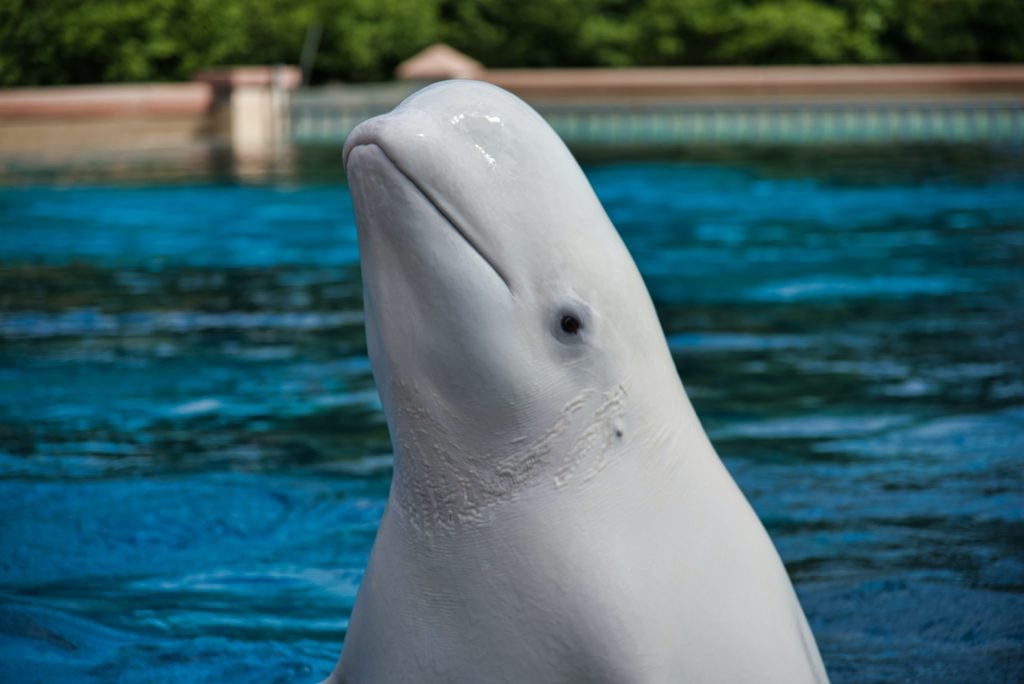
Another Cetacean trapped in the Seine
At the end of May 2022 less than three months ago, another cetacean lost his life in the Seine. An Orca, named Sedna lost his life after being in the river for two weeks. Whilst the orca was ill and it ended up dying of natural causes it poses the question of how and why an animal like this managed to lose its way from its natural habitat.
In three months it is the second whale of the sort to stray so far away from its natural habitat. But the situation is not unheard of as other whales have gotten lost in Seine or in the river Thames.
The president of the non profit organisation, Sea Shepherds, said that there is no concrete answer as to why these animals are getting lost but there is one speculation: noise pollution in the sea.
Noise pollution as the main cause for these animals getting lost
Cetaceans like the beluga whale and the orca use sonar to direct themselves while swimming and keeping in contact with the other whales in their pods. Experts have said that noise pollution in the sea from maritime traffic and drilling is highly disruptive.
In an interview with France 3, Lamya Essemlali said that the intense maritime traffic in Le Havre increases noise pollution in the sea. Furthermore the construction of a wind farm for offshore wind energy off the coast coast of Courseulles-sur-Mer is a construction site that is very loud. Humans have a hard time getting a full picture of how loud this drilling is because the noise does not impact us in the same way it impacts cetaceans.
Moreover, the projects of offshore wind farms are conducted in protected areas and are disturbing the sea life in those areas. These are not proven to be the reason why these animals are getting lost but it is a good guess. It makes us realise that the human impact in the sea is getting more important every day.
The stories of the beluga and the orca need to be an eye-opener for how humans are conducting themselves in the sea.