



Two students have won £11,500 from the University of Bristol to fund their menstrual cup cleaner start-up. The product, called Cup2, is a portable sterilising and cleaning case.
Kira Goode and Monica Wai surveyed thousands of women for their final year research project to find out what put them off using menstrual cups. Their research highlighted two concerns for women when it comes to using the sustainable period product. One of the issues women cited was the difficulty of changing menstrual cups in public toilets, while the other was the difficulty of sterilising the cups at home, especially in shared houses.
A product to improve the lives of menstruators
Goode and Wai will be using the money from Bristol uni to fund their current patent application. According to Goode’s LinkedIn page, the duo are still looking for investment to help them launch their product.
The current aim is to bring Cup2 to the market in June 2023, as consumer testing is now nearing competition.
Wai told Bristol Uni that their mission is to help and improve the lives of menstruators, and expressed her joy over having received the funding from the institution.
‘It feels crazy to have won! It really makes the hard work worth it and it’s so exciting to be closer to our launch target!’
Wai, who studied an Integrated Master’s in Management with Innovation, continued on to say: ‘We hope that by creating this product and building a community we can work towards reducing some of the taboo surrounding periods. We also want to help the environment by reducing the use of single use plastics.’
What makes their product stand out?
‘The only competitor currently on the market only fits very specific cups. Ours will cater for every size and shape,’ Goode explained. Cup2 will have ‘a big impact on people’s lives,’ but also on the environment too.
It brings environmental benefits
The duo calculated that those using menstrual cups and their cleaner will save £564 over five years, and will use 96.6% less single-use plastic over 10 years. They also hope to donate a Cup2 for every one they sell.
Goode, who studied for an Integrated Master’s in Electrical and Electronic Engineering with Innovation, said: ‘It’s amazing to win this funding, which is going to make a real difference to what we’re doing.’
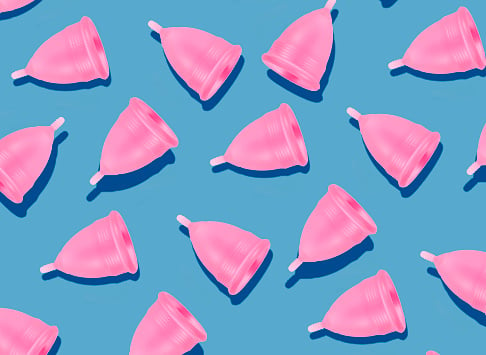
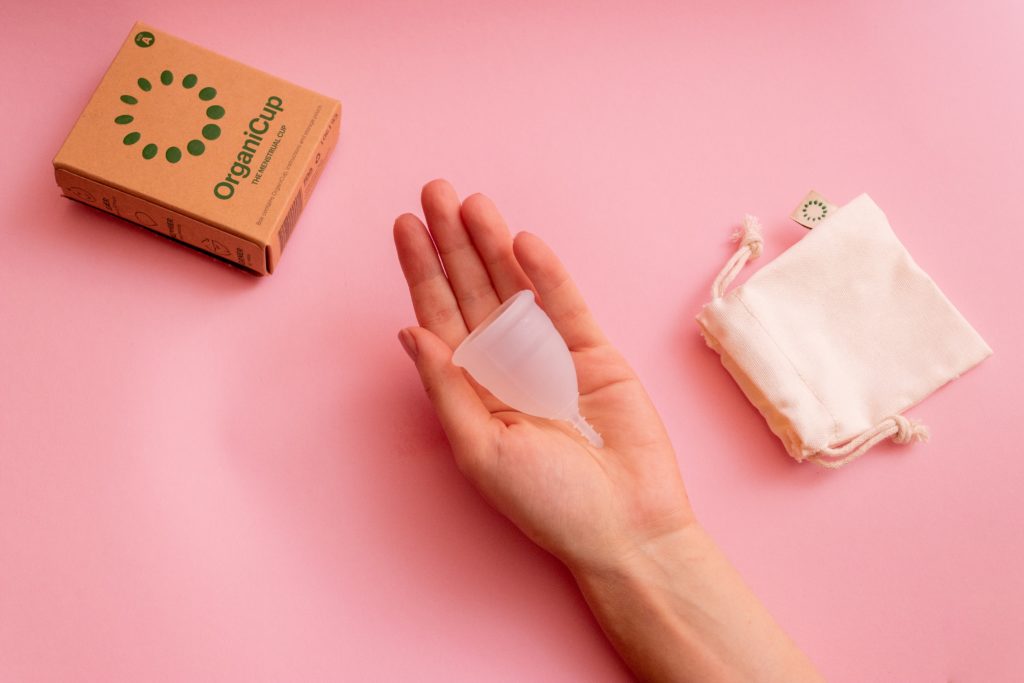
Despite being around since the 1930s, menstrual cups have risen in popularity in recent years. They are small, flexible cups made of silicon or latex rubber, which are inserted into the vagina. They work differently to tampons, and instead of absorbing your flow, they catch it.