

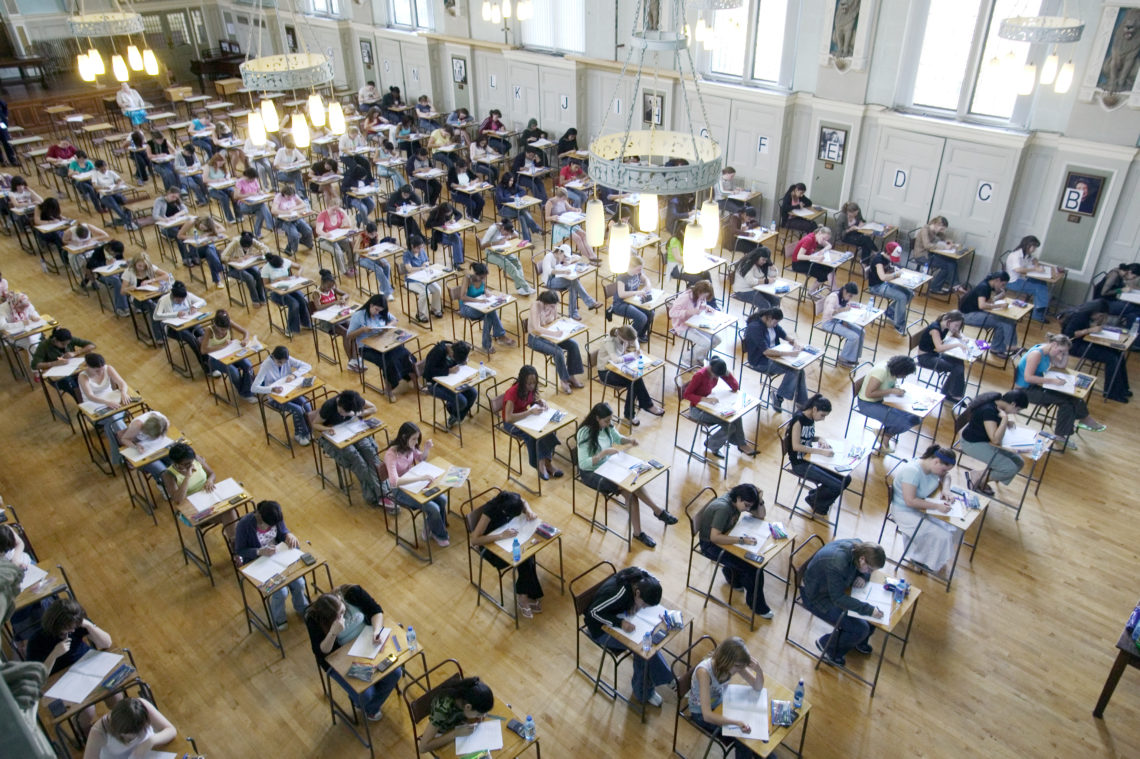


Pupils who feel particularly joyful don’t do any better in their GCSEs than their peers who do not feel as happy, according to UCL research.
According to a peer-reviewed study, published in Assessment in Education: Principles, Policy and Practice, by Professor Jerrim, UCL Social Research Institute based at IOE, UCL’s Faculty of Education and Society, a teens who felt generally joyful didn’t necessarily do better in their exams.
A study of joy
Professor Jerrim explained the idea for the study came as this is the first year teens will sit the GSCE exams after the COVID pandemic put them on hold and many people were worried what impact the pupils’ mental health would have on these.
He said: ‘This academic year we are due to see the return of GCSE examinations after a Covid-enforced two-year hiatus. Before the pandemic hit, there was much concern about how these high-stakes examinations may be affecting young people’s mental health.
‘At the same time, it was recognised that those Year 11s who were struggling with their wellbeing may see their GCSE grades suffer as a result. The paper finds that the link between the wellbeing of Year 11 pupils and the GCSE grades they achieve is not actually as strong as you might think.’
The study analysed data from 4,000 pupils aged 15 and 16 in England from PISA (Programme of International Assessment) 2018.
In the sample, Year 11 pupils were asked how often they usually felt happy, lively, joyful, cheerful, or proud using a four-point scale of never to always.
Their responses were divided into three groups: low levels of wellbeing (the least happy 20%), high levels of wellbeing (the happiest 20%) and those who were in-between. Professor Jerrim then compared the GCSE results of these three groups to investigate the link between wellbeing and exam performance.
The results show that the probability of achieving at least a grade 4 (grade C) in mathematics by level of wellbeing in Year 11 are 75% for the ‘low wellbeing’ group, 78% for the ‘average wellbeing’ group, and 76% for the ‘high wellbeing’ group.
Does Wellbeing Effect Performance?
Overall, the difference was incredibly small and Professor Jerrim explained this suggests links between emotions and outcomes may not be as clear-cut as previously thought.
‘The findings suggest that any claims of a link between negative emotion, fear of failure and educational outcomes are somewhat exaggerated and in reality, these emotions seem to be largely unrelated to young people’s performance in high-stakes examinations,’ he said:
‘Policy and practice should focus upon such emotions as being of importance and concern in their own right, rather than due to any potential link with future educational outcomes.’