

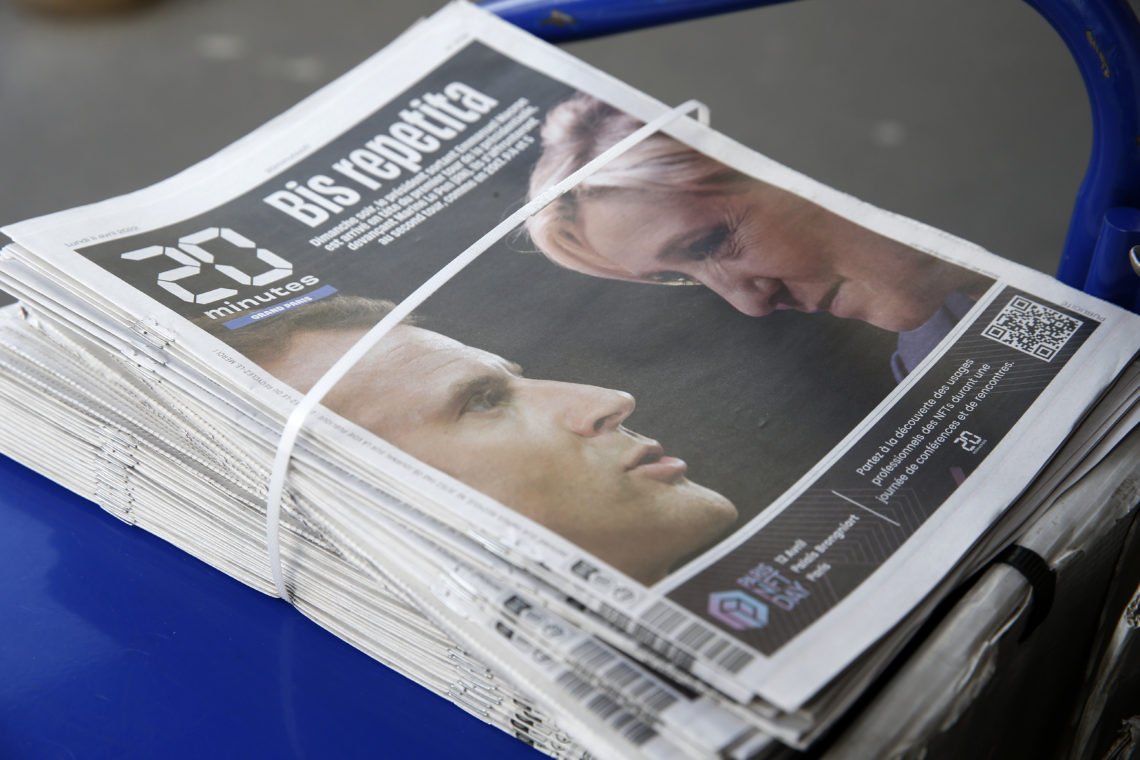


After clashing in the fight for the job in 2017, centrist president Emmanuel Macron now faces far-right leader Marine Le Pen once again – and this time she poses an even greater challenge for France’s youngest-ever leader.
The second – and likely final – round of voting will happen on 24 April, with polls suggesting a close race. But who are the candidates and what do they want for their country?
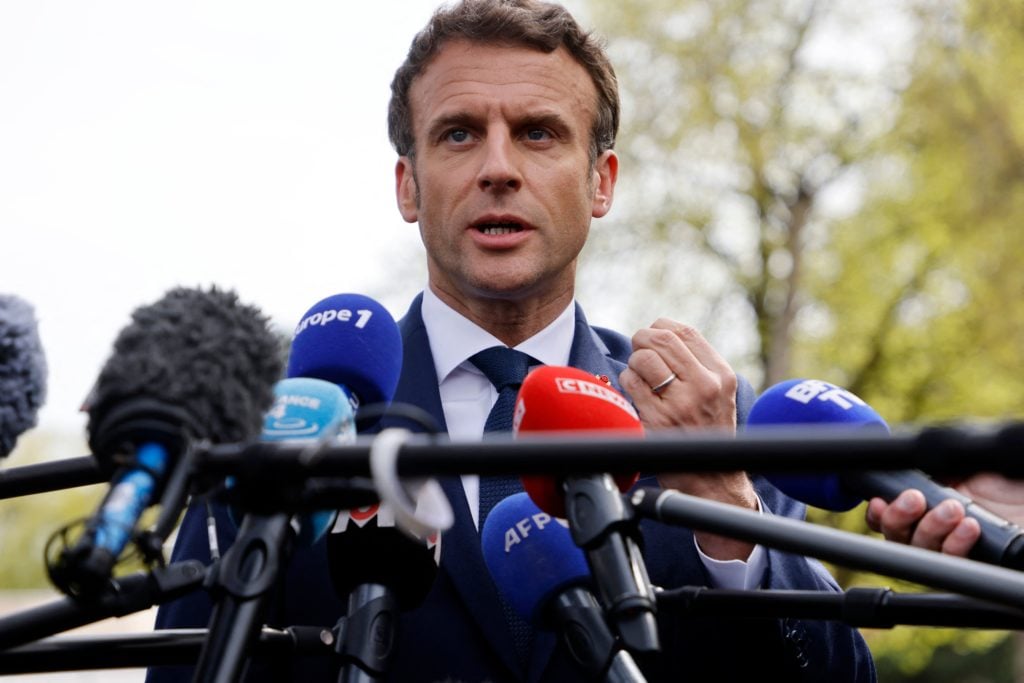
Emmanuel Macron: ‘La République en Marche’
Macron’s rise is often described as ‘meteoric.’ As France’s youngest president in history, he swept to power aged just 39, defeating Le Pen in the 2017 run-off with over 66% of the vote. This win is frequently credited to his ‘unknown quality’, with Macron in 2017 simply a former economy minister whose charisma and revamped centrist vision for France set him apart from the ruling classes.
Macron’s background in investment banking, coupled with his ties to Socialist president François Hollande, presented to voters a president willing to overlook political loyalties for the betterment of France. Macron has remained relatively popular to this day, winning more than 27% of the first-round vote, a bigger majority than in 2017, and continues to dominate French politics, cutting taxes and tightening anti-terror security.
However, his presidency has had to contend with significant social unrest in France. An unpopular proposed fuel tax in 2018 stoked weeks of unrest from les gilets jaunes (‘yellow jackets’), ultimately leading the president to scrap the tax – a ‘win’ for the protestors. The protests undermined Macron’s image as a ‘man of the people’, and for perhaps the first time during his tenure, made him incredibly unpopular.
Yet now, Macron is promising full employment within the next five years, a tax cut of €15 billion (£12.5bn) per year for businesses and households, popular people-pleasing policies for the majority of French voters. But to pay for this, Macron plans to raise the retirement age from 62 to 65 – increasing the pension age will undoubtedly be unpopular with the electorate already to facing the cost of living crisis.
Le Pen has criticised Macron for being out of touch with his voter base, calling him a ‘candidate of finance’ despite her own similarly wealthy background. Whilst currently the favourite to win, many voters backing Macron in his first term may have run out of patience – opinion polls suggest the race is still wide open.
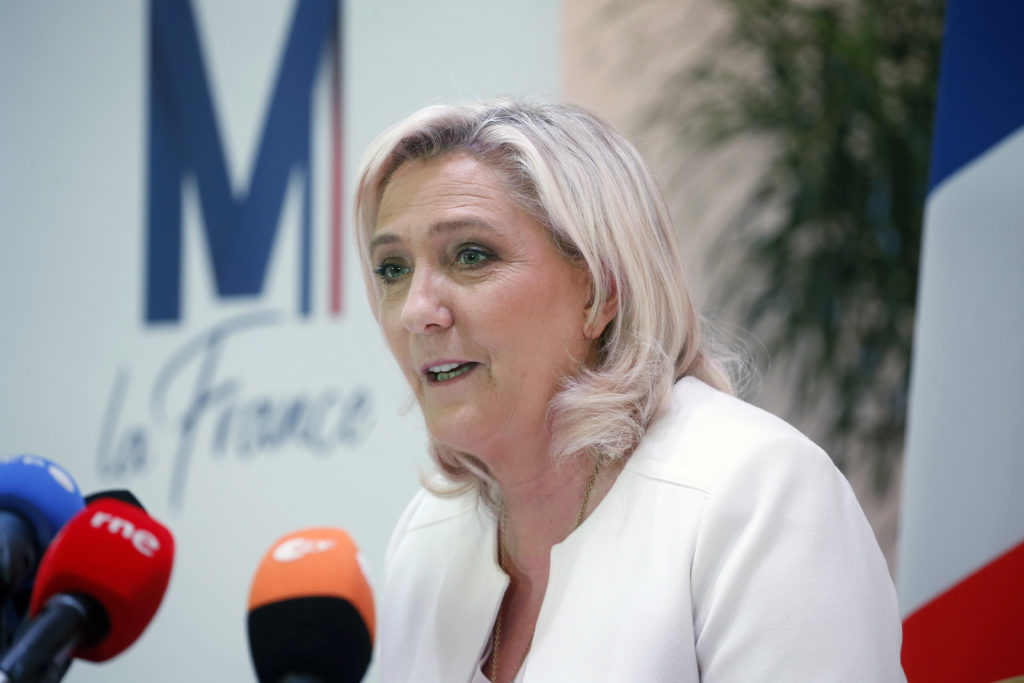
Marine Le Pen: ‘Rassemblement National’
With this her third attempt at gaining power, this could be far-right leader and career politician Marine Le Pen’s closest opportunity yet.
The Le Pen name is synonymous with the far-right in France – her father, Jean-Marie Le Pen, founded and lead the National Front for years, and was convicted and fined in 1999 for what a Munich court described as ‘minimizing the Holocaust, which caused the deaths of six million Jews.’ Jean-Marie was also convicted on two separate occasions in 2005 and 2008 for ‘incitement to discrimination, hatred and violence towards a group of people’ following statements made about Muslims in France.
Marine Le Pen, however, has fully distanced herself from her father’s activities – expelling him from the National Front in 2015, stating that her father should ‘no longer be able to speak in the name of the National Front.’ She has also relaxed some of the National Front’s traditionally conservative policies, revoking its opposition to same-sex marriage and access to abortion. Nonetheless, the Le Pen name remains synonymous with far-right, even fascist views – something that could put off potential voters.
Boasting a long career in French politics, Marine Le Pen was elected as a Euro MP before running for president. After a resounding defeat at the hands of Emmanuel Macron in 2017, she has since rebranded her National Front party as Rassemblement National, or National Rally.
Her campaign has thus far been consistently anti-immigrant and anti-European Union; Macron has since branded her policies as racist and xenophobic. Le Pen has condemned the Russian invasion of Ukraine, yet previously expressed her admiration for Vladimir Putin, as well as relying on a Russian loan for her 2017 campaign.
Marine Le Pen’s current manifesto promises to ‘halt abuse’ of the right to asylum, including a referendum on immigration restriction – she also plans to ban the wearing of the hijab in public places. The opinion polls suggest that Le Pen does have a genuine opportunity for victory – it remains to be seen if she can improve on her 2017 results.