

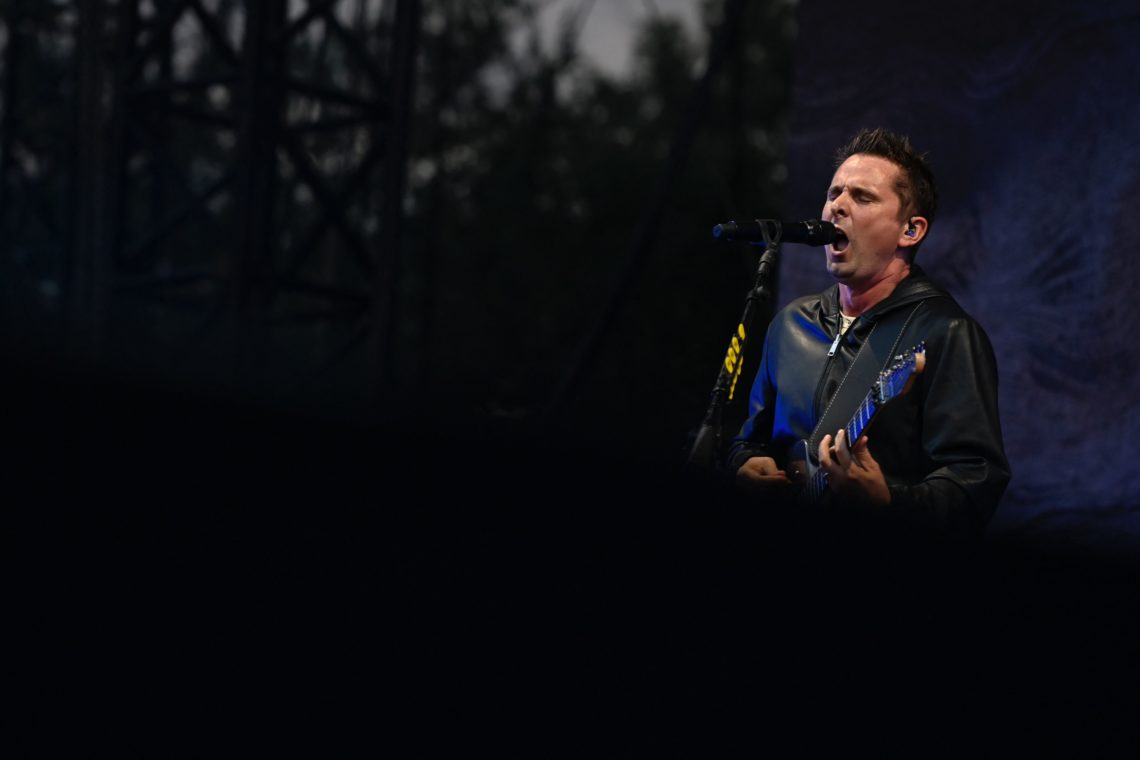


The grandiose, elaborate and patently dystopian has always been what Muse does best. Supermassive Black Hole and even earlier songs like Sunburn gave us short, sharp bursts of pure energy, a dark, sensual cacophony of electric guitars punctuated by Matt Bellamy’s soaring vocals. They were part of that explosion of 2000s British rock powerhouses, following in the footsteps of the holy trinity (The Beatles, Queen and Radiohead).
Alongside their brethren – The Libertines, Kaiser Chiefs – they simply made good music without taking themselves too seriously, speaking directly to a new generation that were sick of listening to their Dad’s Led Zeppelin CDs and who wanted something younger, cooler and slicker. Years later, the band era having died a slow death, critics screwed up and tossed the whole lot into a pile labelled “landfill indie”. Each new release from bands like Muse, apart from delighting their long-standing fans, serve as a retaliation against the label – we’re still here, and our message is as relevant as ever.
Tried and tested
Will of The People staunchly follows Muse’s tried-and-tested anti-authoritarian formula, no more present than on its forerunners Drones and Simulation Theory. The track listing boasts protest songs with less subtlety than a slap in the face, imploring listeners to rebel against authority and refuse to step in line. So why does it ring so hollow this time around?
The title track, Will of the People is classically Muse – snappy, energetic, the repeated tagline as catchy as ever. But it’s also surprisingly run-of-the-mill. The refrain will of the people betrays a sense of irony, overused as it is in British politics. The attempts of the establishment to justify its actions based its interpretation of the people’s supposed will has made it quite the loaded phrase. It implies a whole host of possible directions in which the band could have taken a song like this, from the earnest to the tongue-in-cheek. However, there’s little evidence that the band has considered any of them. The result is a bland protest song that follows along exactly the same lines as their previous efforts and aptly sets the tone for the rest of the album.
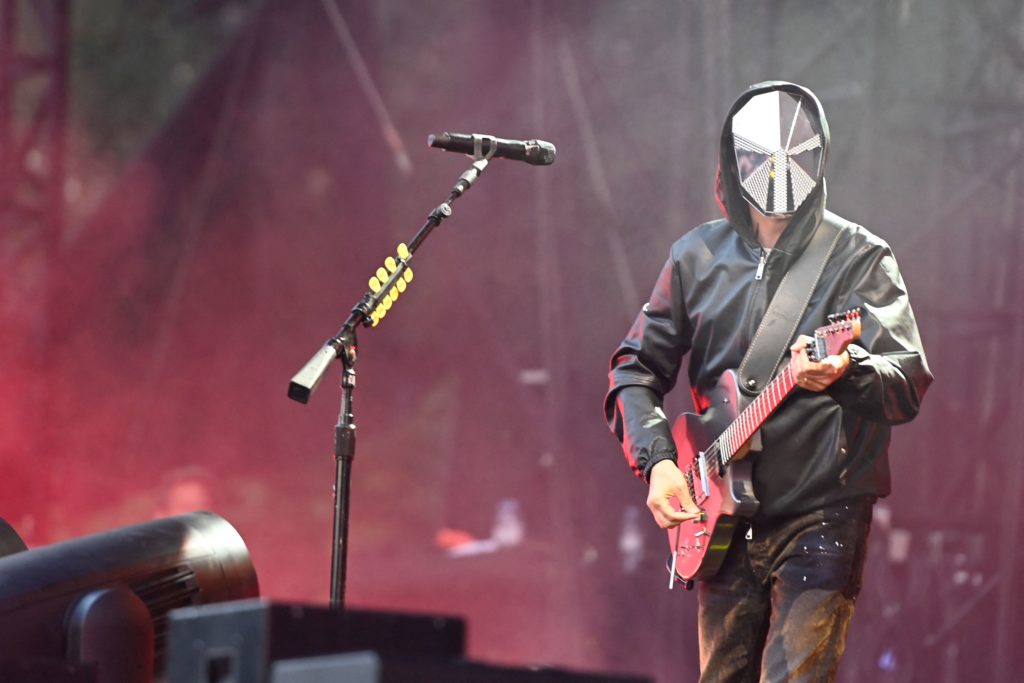
Doesn’t hit their own heady heights
While again calling for listeners to rise up against the tyrannical super-state, Liberation fails to break the mould itself. Seemingly a carbon-copy of a Queen song, from the thundering instrumental to the teeteringly high backing vocal, the unimaginative nature of the track rather undermines its revolutionary sentiment. Won’t Stand Down takes a different tack – far from being formulaic, not even the rhythm seems consistent, with Bellamy confusingly stretching phrases far beyond their syllabic limits. It’s a basic, noisy rock song, alongside Kill or Be Killed, which to their credit will probably treat a live audience to an immense soundscape.
Ghosts (How Can I Move On) shoves the narrative into the heartbreak territory and utilises the beautiful Romantic piano that Muse is known for. The full range of Bellamy’s impressive vocals soar in this stripped-back number, while perhaps overdoing the yearning and sentiment. It’s nonetheless a poignant moment, made all the more so by the fact that it is about people who lost their partners during the pandemic. This effect is promptly disintegrated by You Make Me Feel Like It’s Halloween, which combines 80s synth, robotic vocal effects and an organ into a discordant mess of cringe.
Verona, like the sole survivor emerging from the wreckage of this car crash, is the stand-out track of the album. A Romeo and Juliet story in the age of Covid, the song speaks to the human desire for connection, of reaching out despite the fear of contagion. A rippling electronic backdrop, interwoven with electric guitar, frames Bellamy’s powerful vocals and injects a burst of creativity into an otherwise uninspired tracklist. We Are F****** F***** provides an effervescently high-energy end to the album, full of the cynicism and disillusionment with the state of things that currently characterises British society, and perhaps the only song on the album that doesn’t try to be more than it actually is.

In a country reeling from the pandemic and in the midst of a cost of living crisis that gets worse by the day, its government repeatedly tearing itself apart, protest songs could not be more relevant. Muse’s rehash of vague diatribes like “we’ll be no longer silenced” and “fall into line, you will do as you’re told” are patently targeted at those who want to feel like a rebel for approximately three minutes, without thinking too hard about their own role in upholding the status quo. This is all good fun, a light-hearted escape from the monotony of everyday existence, in that larger-than-life, bombastic style that Muse usually does so well.
Now, with strikes happening all over the country and people desperately wondering how they can live without being able to afford their energy bills, protest seems like the only way out of a stagnant and failing system. Despite some shining moments, many of these tracks are at best, cringey, and at worst, completely tone-deaf, cosplaying revolutionary sentiment whilst remaining totally devoid of substance.