

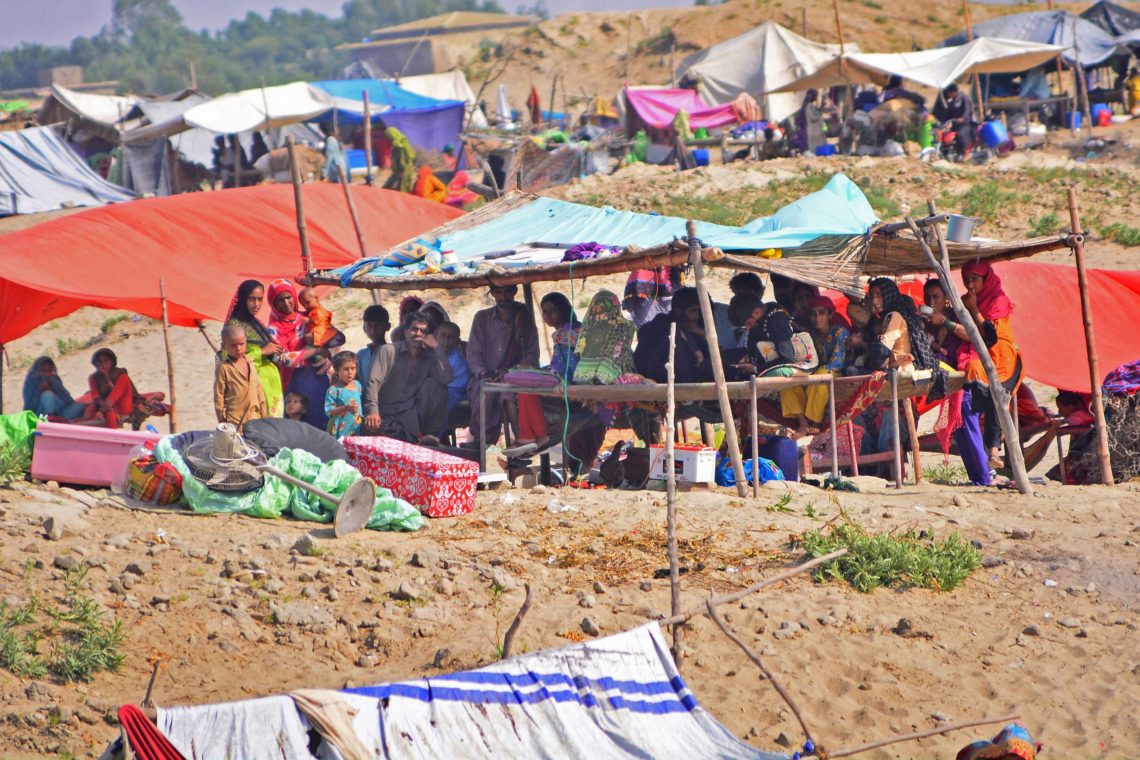


For a country like Pakistan, extreme heat is not something new. Neither is monsoon season. However, the intense heat and intense rain it has experienced this year is out of the ordinary. It is like the heavens have opened up on Pakistan. The rains have been washing away villages and leaving millions displaced with nowhere to go.
The intensity of this rain is terrifying. Pakistan has received over 391 mm of rain. This number is nearly 190% more than the 30-year average in July and August. And now experts warn that global warming has not helped the situation.
Rising waters cause rising casualties
When the rain began in June, Pakistan had no idea that it would displace 33 million people to date. And the floods have also caused 1,500 people to lose their lives as well as 458 children. Many have had to flee from their homes, with nowhere to go. They sleep in elevated areas like the side of highways to protect themselves from the rising waters. Officials have even said that that one third of the homeless in Sindh do not have a tent to sleep in.
After having lost everything, these people are not even getting help from their government. The extent of the floods is that important.
However the situation is not getting better. According to UNICEF, 3.4 children are at risk of ‘waterborne diseases, drowning and malnutrition’.
Aid flights from western countries have started to arrive as the country declared a state of emergency. However, one third of the country is underwater.
Humans are not the only casualties of the floods
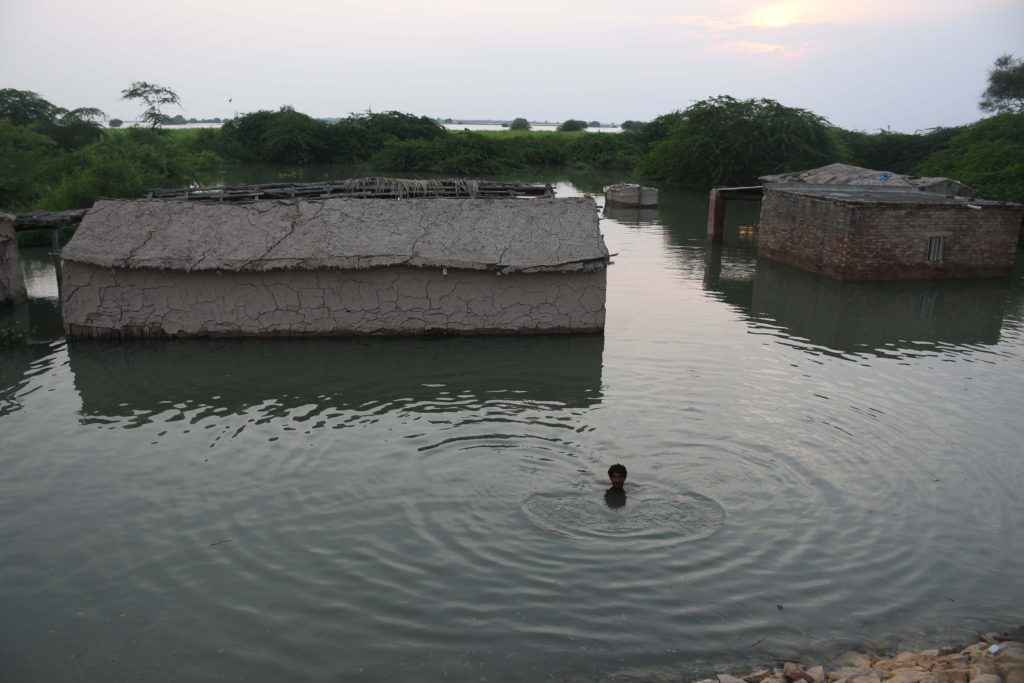
30 million of people have been displaced because of the flood but the country is also experiencing massive infrastructure damage. The floods has been devastating to infrastructure, cattle and crops. People’s homes have been destroyed, taken away by the flood water.
Estimations are that 1.7 million homes have been destroyed.
Farmers have been doing all they can to save their livestock, however, it is not long before food for the cattle runs out. The damage of these crops and livestock is very problematic for a country like Pakistan. This as well with the rising food prices means that the poorest of society will face a very difficult winter.
The country currently faces about 30 billion US dollars of damages, with the loss of food crops coming in at $2.3bn. Over 45% of the country’s cotton crop has been ruined. It is the country’s biggest export. The floods are likely to have long term consequences on the country.
Many will have to rebuild their homes in the fear that global warming will continue to impact their livelihoods and that their homes will not last long. The displaced people face malnutrition, and waterborne infections.
Experts claim climate change have made things worse
Experts have now made the claim that climate change and global warming have made the flooding even worse. Friederike Otto, climate scientist, found evidence of global heating in the Pakistan floods.
However, with rising temperatures the large glaciers that Pakistan has in its Gilgit-Baltistan and Khyber Pakhtunkhwa regions are rapidly melting. Their melting has caused lakes to be formed downstream which are expected to burst.
Furthermore, those living on the banks of Lake Manchar are facing unprecedented challenges. This lake used to be people’s livelihoods. Today it is their biggest enemy. The fishes in the lake used to be key for people’s survival. Now it cannot sustain them.
In normal times the lake has been slowly disappearing but it has now burst its banks. Destroying homes in its past, displacing the thousands that lived on its banks.
What has been seen, is that it is the people with the smallest carbon footprint of the country that are suffering the most. What is clear is that global warming is no longer a question and we need to act now before more devastating consequences.