



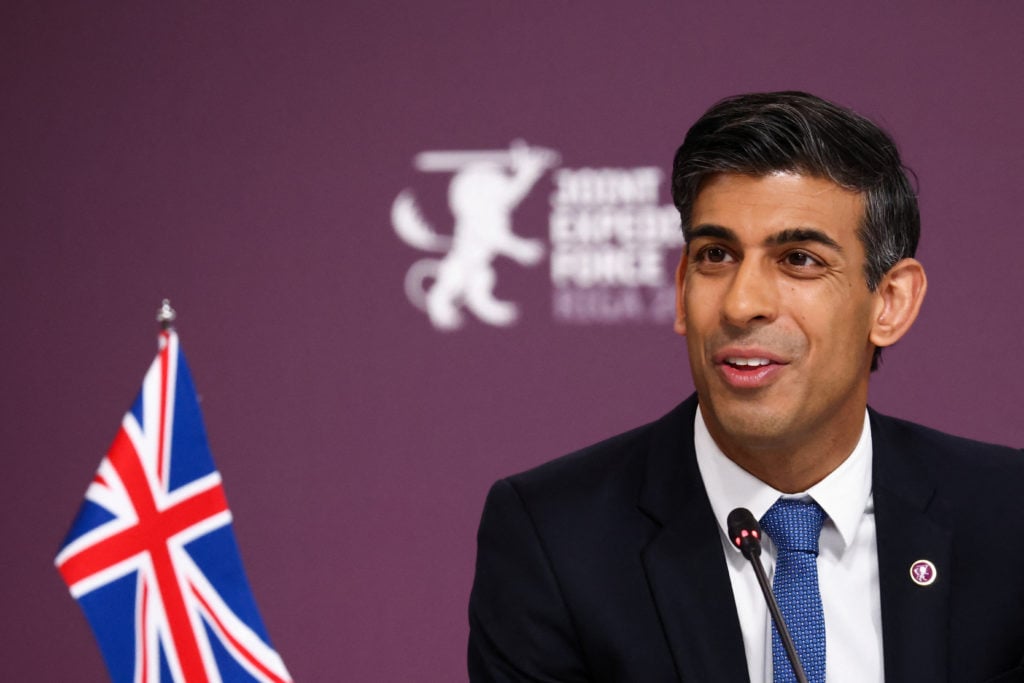
In a recent announcement, prime minister Rishi Sunak discussed plans to get all students learning maths in further education. Whilst the feat is admirable, it might not actually be what is best for students. The plans should make us ask why should pupils study maths until they are 18.
In amongst the NHS falling apart, the cost of living crisis, and strikes taking place every other day for battles over fair pay, the prime minister has announced something to help solve all of these problems.
Oh, wait, no — he has been thinking about maths.
Adult innumeracy is a problem that should be addressed. Pupils should go into the adult world with a set of mathematical skills so they are prepared for the workplace. That can’t be denied.
However, it’s not really the most pressing problem. Plus, forcing all pupils to study maths until they are 18 won’t fix adult innumeracy either.
Rishi Sunak’s Maths Announcement
Education seems to be on Mr Sunak’s mind. Earlier this year, the prime minister vowed to shake-up post 16 education and remove university degrees that don’t have high-earning potential. Now, he plans to propose that all pupils should study maths until the end of compulsory education, which is 18.
His plans aren’t for all 16-18-year-olds to study A-level maths, but multiple routes to ensure that young people are mathematically ready for the real world. The Guardian reports that Mr Sunak’s first political speech of 2023 will propose his plans, and say the following:
“Right now, just half of all 16–19 year-olds study any maths at all. Yet in a world where data is everywhere and statistics underpin every job, our children’s jobs will require more analytical skills than ever before. And letting our children out into the world without those skills is letting our children down.”
Possibly, it is letting our children down more when we are unable to provide warm homes or hospital appointments.
Additionally, with the biggest teacher strikes in almost 40 years happening last year, with more proposed for 2023, the question of where all these maths teachers will come from is yet to be answered.
Being prepared for the workplace is incredibly important. But not all jobs are “underpinned” by data and maths. Plus there are lots more life skills neglected by the educational system that are absent in the curriculum.
And, possibly more crucially, has anyone actually asked whether pupils want to study maths for even longer? I, for one, was more than ready to give it up at 16.
Why Should Pupils Study Maths Until They Are 18?
There are certain aspects of maths that, ideally, you would want all young people to be confident with once they reach 16. Calculating percentages, basic arithmetic, how to read a graph and more. If a child gets to 16 and they still need help in these areas, then, of course, they should be getting the help they need.
However, once you get to your GCSEs or even Secondary school, maths moves away from that entirely. It becomes geometry, algebra, letters and triangles and circle theorems. I’m not saying that no jobs include these, but it seems a little generic to suggest that all jobs use all the maths we are learning up to 16, and then some more.
Plus, access to calculators which do lots of the hard work for you is easier than ever due to mobile phones. Most people have a calculator in their pocket, on a computer, or just a good old-fashioned one in the drawer. If we have people that aren’t able to access this resource easily, then we should be asking why, and fixing that problem. Not just getting them to do it in their heads.
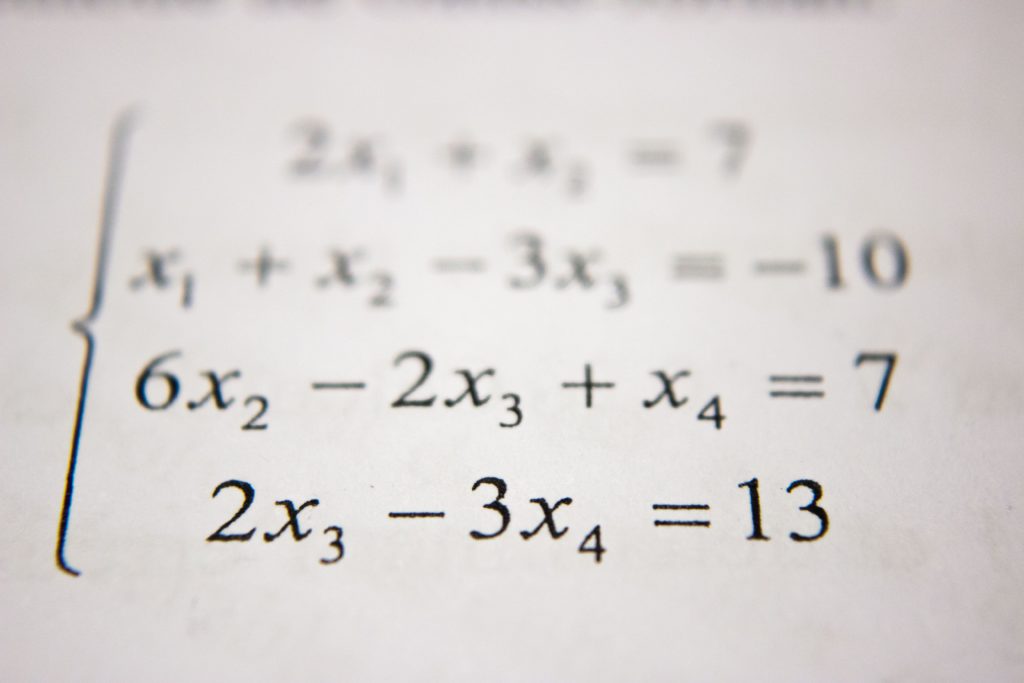
If we are going to go down the route of forcing even more maths on pupils, then it should be real-life skills. Actual real life-skills. Not data analysis, but how to do self-assessment tax, how to save for a mortgage, and the different types of insurance. These things are much more likely to crop up in a young adult’s life. Yet we still aren’t using the curriculum to prepare them for it.
Perhaps teaching how to budget, calculate wait times, or work out fair pay should be on Mr Sunak’s educational agenda. That would certainly prepare them for the immediate world young people are being thrown into.
Forced Maths Takes Away Educational Freedom
As I mentioned, I was very eager to leave maths behind at GCSE. I was lucky enough to be able to do that after getting good grades. But I also worked for those grades so I could leave maths in Secondary. Those who don’t get whatever number equals a C have to carry maths on in further education. Whether you agree with that or not, it is understandable.
But if I had been told that I still had to do maths in college, I would not have gone. And I was a goody-two-shoes at school. I fear that forcing pupils to continue with a subject that they despise will either increase academic anxiety or just make them think “why should I bother?”
For the first time in their educational careers, further education offers 16-19-year-olds a choice. Taking away that liberty will have more ill effects than I think Mr Sunak has considered.
Aspects of Rishi Sunak’s maths announcement are well-intentioned, but it screams of putting a plaster over a bullet hole. One hopes that the prime minister will use the rest of his tenure to address the problems that are staring him in the face. And not just by using maths.