

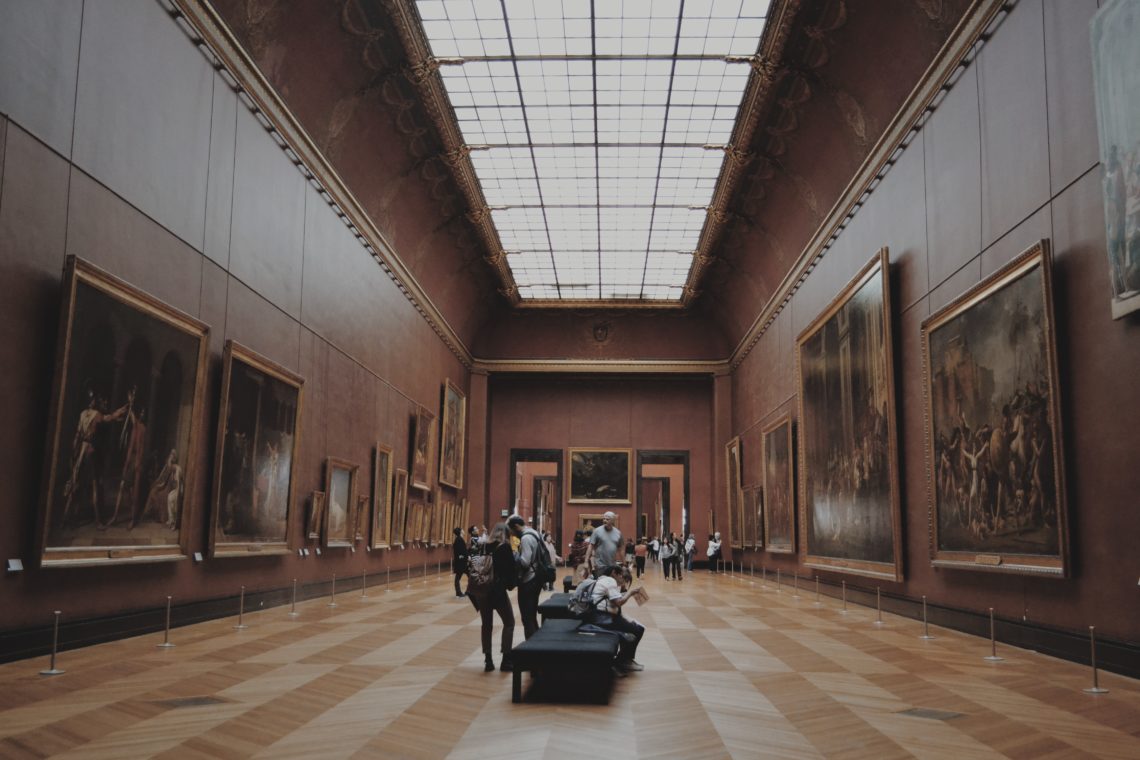


A study due to appear in the British Journal of Sociology of Education examining the impact of ‘cultural capital‘ and how it improves ‘life chances‘ of children has suggested that the museum visits and trips to art galleries that middle-class families can afford do not correlate with improvement in GCSE results.
However, researchers did find that reading-based activities involving children and parents could have an impact on grades.
Examining activities such as visiting the library, reading for fun (as opposed to reading for school), and discussing books together could ‘significantly‘ boost GCSE grades.
The study found ‘engaging in two or three reading activities, on average, increases the pupil’s GCSE score by between seven and nine points‘, and ‘the size of this effect should not be overlooked since an extra GCSE pass at grade A* is worth eight points‘.
The researchers behind the study have also remarked that these results could have a tangible impact on education policy.
The academics – from the University of Sussex and the University of Edinburgh – have said that the idea of cultural capital ‘has become more prominent in government education policy‘, although the concept has faced criticism for suggesting that some cultures are inherently more valuable than others.
‘Extraordinarily naïve’
The terminology has been embraced by the Department for Education over the last decade, with then-Education Secretary Michael Gove telling the Guardian in 2013 that ‘the accumulation of cultural capital – the acquisition of knowledge – is the key to social mobility‘.
In 2019, Ofsted’s inspection framework was altered to include a judgement on schools’ ability to ‘build pupils’ cultural capital‘ – this was met with a wave of criticism for its ‘elitist’ implications.
Associate professor of English at UCL Institute of Education, John Yandell, told the Guardian at the time that schools attempting to create social change without recognising an unequal society they work in is ‘extraordinarily naïve’.
Similarly, a Cambridge academic studying education, Professor Diane Reay, said to the Guardian: ‘This new requirement is a crude, reductionist model of learning, both authoritarian and elitist.
‘The key elements of cultural capital are entwined with privileged lifestyles rather than qualities you can separate off and then teach the poor and working classes.’
Using statistical models from data acquired by the Understanding Society survey that recorded the goings-on of households in Britain, the researchers then compared this data with the educational records preserved in the national pupil database.
They noted: ‘This study reports a set of empirical findings that do not lend any support to the view that increasing cultural capital will reduce the size of social class inequalities in school GCSE outcomes.
‘This is not to argue that activities that have sometimes been associated with increasing cultural capital should not be part of the school experience – for example extracurricular trips may contribute to educational enjoyment.’