

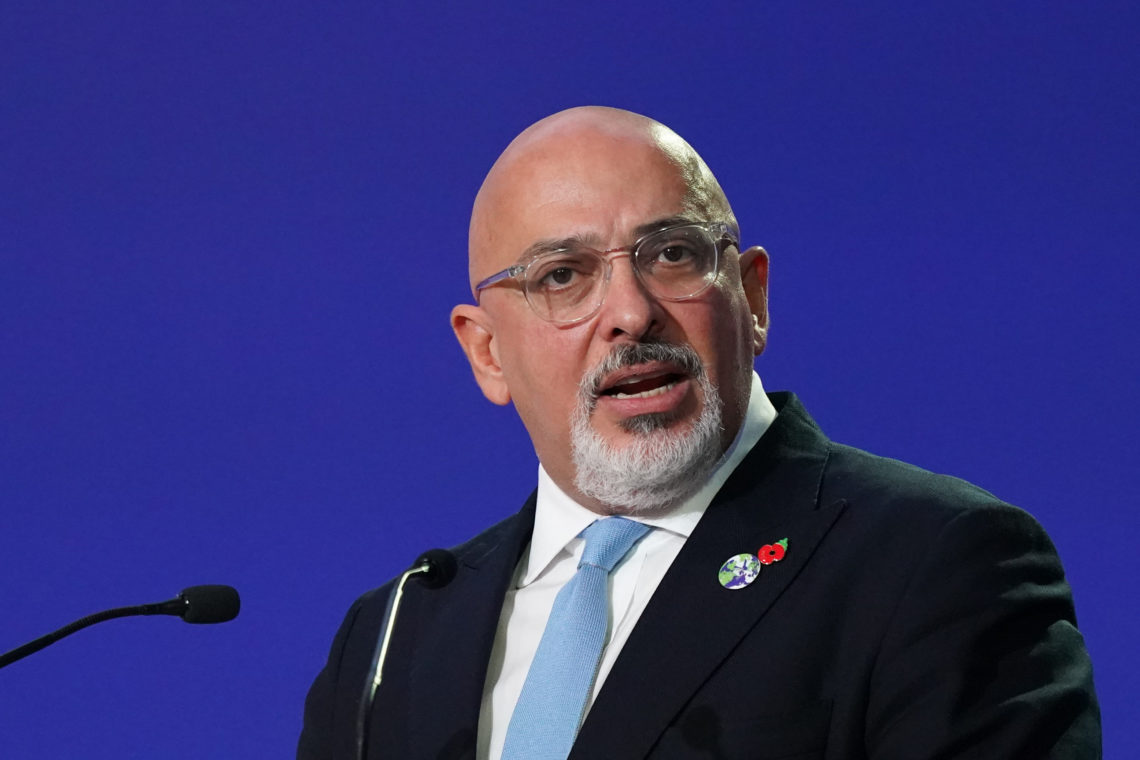


The Education Secretary, Nadhim Zahawi, indicated teachers should not expect a pay rise despite soaring inflation rates and should ‘exercise restraint’.
Nadhim Zahawi told Times Radio public sector workers will have to endure salary ‘restraint’, despite the calls on the government to provide financial assistance in the face of the cost of living crisis.
‘Exercise Restraint’
Zahawi stated: ‘For more senior staff, we’re looking at a 5% increase over two years. So again, inflation is running ahead of that, of course. But nevertheless, to clarify those two years, well, that’s up to 2023.’
When asked to confirm that teachers would have to accept not receiving a pay rise mirroring economic shifts, the cabinet minister told The Independent: ‘Well, I think I hope I’ve described to you that we’re facing a global battle against inflation,’ adding ‘the private sector employees, which is about 80% of the workforce are having to deal with this as well.
‘I think it’s incumbent on us in the public sector to also exercise restraint.’
In the same interview with Times Radio, Mr Zahawi denied claims of warring cabinet ministers panicking that the cost of living crisis will affect the upcoming May local elections.
The education secretary defended the government, invoking the war in Ukraine. He said: ‘I wouldn’t describe it as fractious. I would say it’s every day, every such state has to make difficult decisions, because we’ve had a global pandemic and now of course a war in Europe.’
‘The Final Straw’
Speaking to The Observer, the general secretary for the Trade Union Congress (TUC), Frances O’Grady, said: ‘If they don’t at least get a proper pay rise and help to reduce workloads, it will be the final straw.’
O’Grady added: ‘A mass exodus would send shockwaves through every community, and it would damage our economy too. Ministers must be much more alive to this danger. They cannot let it happen.’
The Department for Education (DfE) told the national pay review body to remain with 5% pay increases over two years for experienced teachers, yet has recommended that teachers’ starting salaries hit £30,000 by next year to aid the recruitment process.
Amid threats of a mass exodus – the National Education Union reported that nearly half of teachers plan to quit within the next five years – financial incentives are desperately needed.
Christina McAnea, the Unison union general secretary, said: ‘If the government doesn’t deliver inflation-busting wage increases across the entire public sector, staff will exit for better-paid, less stressful jobs. That would leave services unable to cope.’