

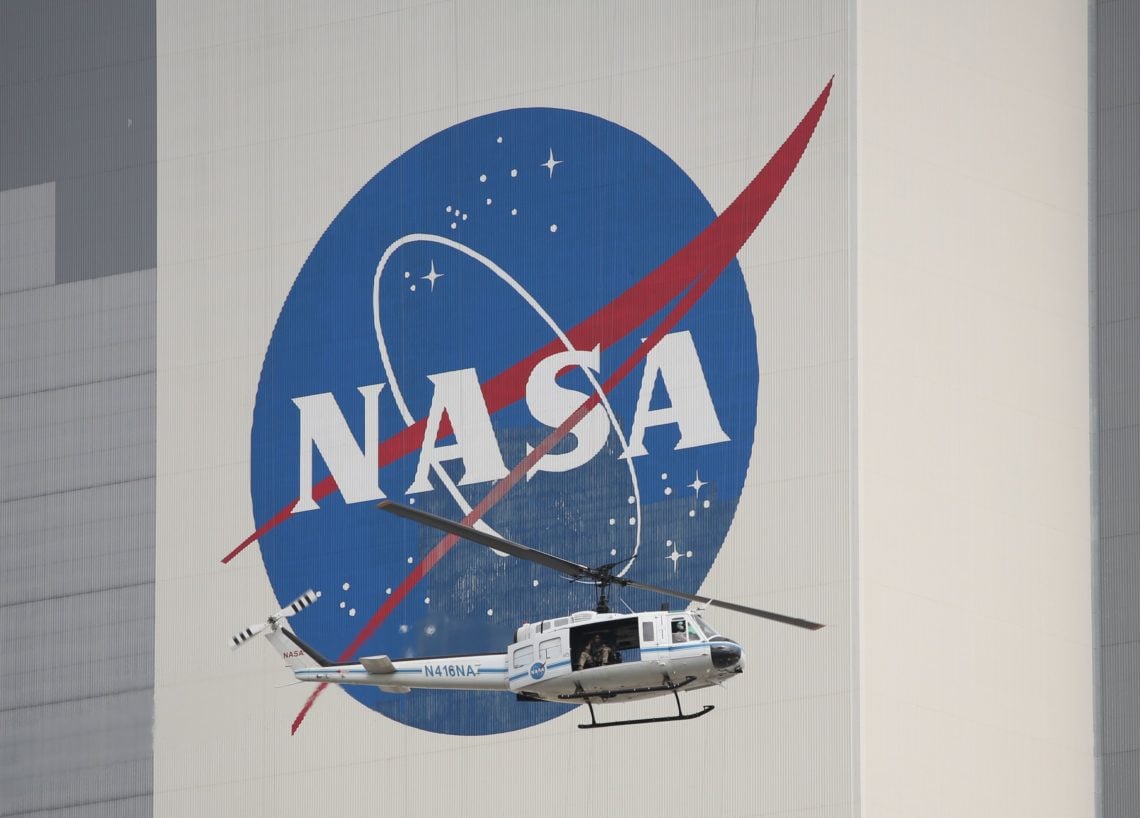


In January 2022, NASA announced that it would discontinue the space station in 2031. But what does this really mean? It means that in a few years, the International Space Station will burn up, de-orbit as NASA put it, in the Earth’s atmosphere and will crash down at Nemo Point, an inhabited part of the southern Pacific Ocean. Nemo Point is referred to as the spacecraft cemetery as it is where previous satellites go to die, such as Skylab, the first US space station.
But why does it have to end? It makes valuable contributions to science, to International space collaboration and is a stepping stone for what is to come in space exploration. However, the ISS can’t last forever. It has been orbiting the earth for nearly two decades now. As of April 2021, 244 individuals from over 19 countries have visited the space station. The ISS was constructed between 1998 and 2011, and measures 356 feet (109 meters), from end to end. That is nearly as big as a football field.
The ISS is a ‘co-operative program’ between Europe, the USA, Russia, Canada and Japan. Each country has contributed in different ways to the scientific developments such as fundamental disease research and growing food in microgravity. These have happened on a space station floating about 248 miles above the surface of the earth.
Coming to an end
While the scientific achievements that have happened way up there should not be forgotten, the space station is breaking down. In recent years, astronauts have had to patch up air leaks as there is damage because of space debris. All in all the space station has served us well. But it is time to move on to better and brighter things.
It has been nearly half a century since someone has stepped on the moon, Eugene (Gene) Cernan being the last astronaut to do so back in 1972. There is no saying when mankind will walk on the moon again. But NASA is hoping to send astronauts back there in 2024. Yet moon exploration is not the only thing on NASA’s mind. The moon has been explored over the course of the Apollo mission back in the 60’s and 70’s. Today NASA wants to go further, seeing more parts of the lunar structure than ever before.
But NASA will not stop at the moon. NASA plans on developing a platform in lunar orbit to facilitate further deep space exploration. NASA is working to build the Orion Space Craft and the Space Launch System to enable multiple, deep-space destinations. It looks like the exploration (human and robotic) of Mars, Saturn and Jupiter are becoming more and more a reality every day.
Space race continues
Deep space travel is not the only thing that can happen after the ‘de-orbitation’ of the ISS. As tensions between the USA and Russia are at an all-time high, it makes sense for both countries to look into building their own space stations. They are the two primary partners of the ISS. India and Russia already have plans to build their own space stations, while China’s Triaging station is currently under construction and has astronauts living in it already.
Countries around the world are not the only ones competing in the space race. While it is not at the heights it was during the Cold War, many countries and private companies want to have a piece of space. Countries like Australia and Saudi Arabia want to send their astronauts but have nowhere to go. Private companies are competing to send their own modules to space.
New era
Space X has been responsible for the transport of astronauts for over a year now. After the USA discontinued the shuttles, it became hard for the USA to continue sending their astronauts to the ISS. The USA had to use Russian Soyuz capsules to ferry astronauts there. Therefore it makes sense that the USA would want to use an American company like SpaceX and Bleu Horizon (Jeff Bezos’s company) to send its astronauts to the ISS. Indeed, NASA and their international partners have just approved the first private astronauts for the Axiom Mission. They will spend 10 days in orbit before splashing down off the coast of Florida. They will be flown to the ISS on the Crew Dragon Endeavour. The private sector is in full growth and could be the key to humans walking on Mars one day.
While the ISS is the end of an era for space exploration, it is only the end for now. All these plans from NASA and other countries will usher a new era for space exploration, discoveries and collaborations.
We are on the verge of a new era in the space race. It has been fifty years since Neil Armstrong walked on the moon. It’s about time that we go back! New space stations, new goals, new discoveries.
Read next: Best things to cook in a rush at university