

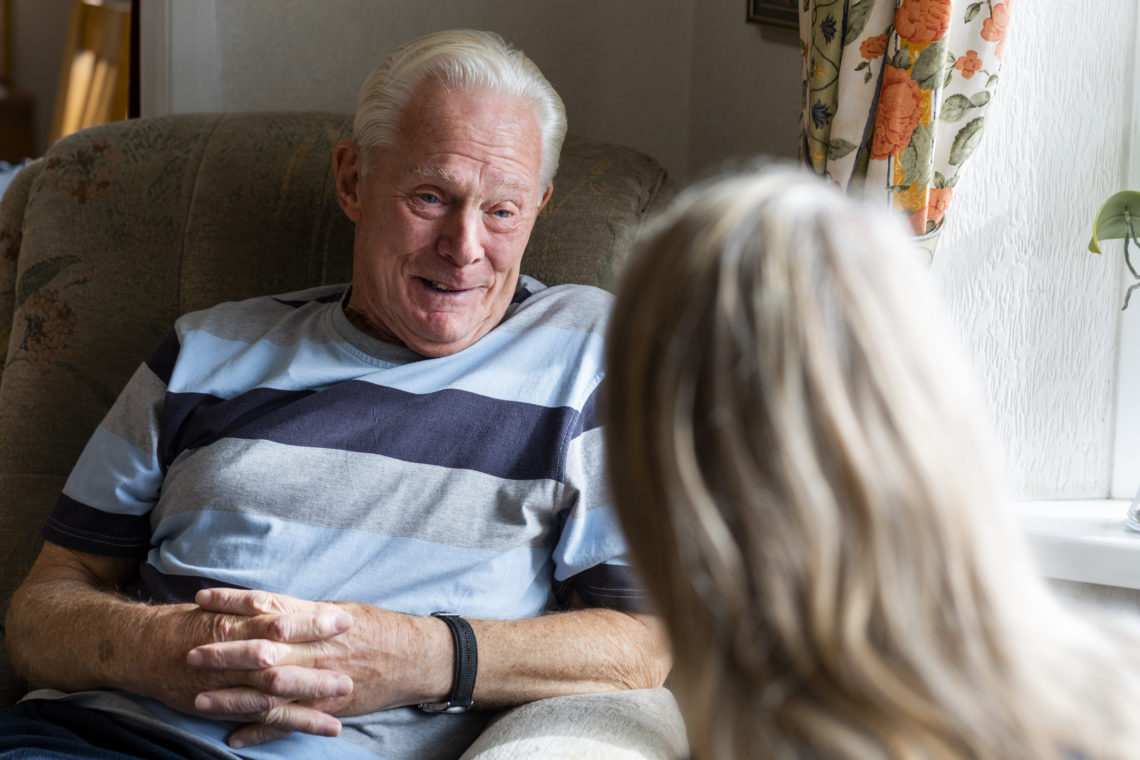


New UCL-led research study has revealed talking therapy could help improve the mental health of dementia patients.
Mental health problems such as depression and anxiety are very common in people with dementia, and previous studies estimate that 38% of people with mild dementia are affected by the conditions.
However, the new study, published in eClinicalMedicine, is the first to look at whether talking therapies that are routinely delivered within healthcare settings might be helpful to relieve symptoms for dementia patients.
UCL Dementia study
Researchers examined data from 2,515,402 people, who had clinically significant anxiety or depression and completed a course of treatment via the national “Improving Access to Psychological Therapies” (IAPT) service in England between 2012 and 2019.

IAPT is a free NHS service and offers evidence-based therapies for treating anxiety and depression, including CBT (cognitive behavioural therapy), counselling and guided self-help, with sessions delivered either face-to-face individually, in groups, or online.
To be counted in the study, participants had to have either:
- Clinical levels of depressive symptoms as measured using a standard questionnaire* which considers factors such as a lack of interest in doing things, issues with sleep, and feelings of low mood.
- Clinical levels of anxiety based on a standard measure** which asks patients questions about how much they worry or have trouble relaxing.
To examine outcomes for people living with dementia, the researchers looked at all those who had a dementia diagnosis before starting IAPT treatment – which was 1,549 people
UCL Research Findings
The researchers found that among people with dementia, the treatment proved to be clinically beneficial and 63% of them saw a reduction in symptoms of depression and anxiety, following IAPT. Meanwhile, approximately 40% recovered completely.

In comparison to the control group where 70% of participants saw an improvement in symptoms and 47% recovered.
Lead author, PhD candidate Georgia Bell (UCL Psychology & Language Sciences), said: ‘Anxiety and depression are very common in people with dementia. They are extremely debilitating and associated with worse outcomes for both the person with dementia and their carers.
‘This is the largest ever study to investigate outcomes of psychological therapies in people living with dementia. Our findings suggest that while people with dementia are less likely to improve or recover than those without dementia, psychological therapies offered in primary care mental health services can be beneficial for them.
‘Consequently, our findings support the use of IAPT to treat anxiety and depression in people with dementia. We hope this study will have implications for encouraging referrals and adaptations to increase access and enhance outcomes for people living with dementia.’