

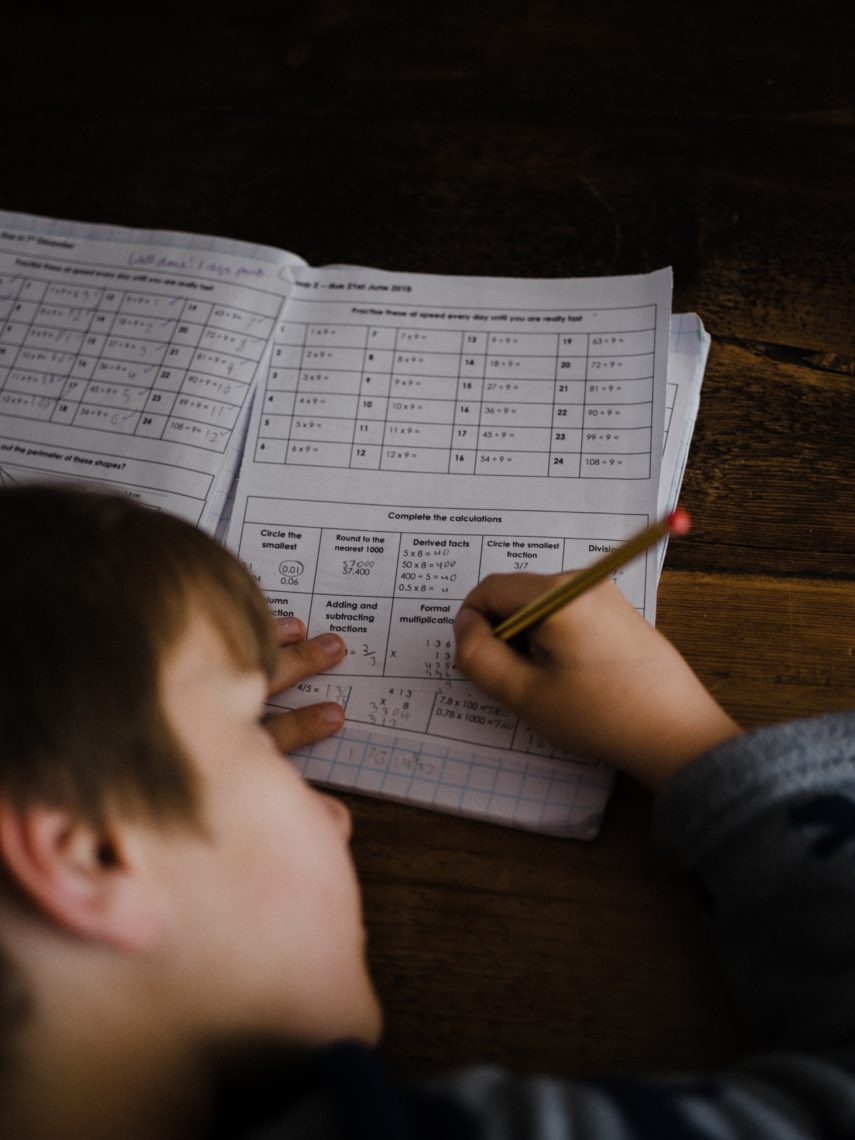


The UK government has announced the first-ever set of national times table data, which has come from a new multiplication tables check sat by year 4 children across the country this summer.
Consisting of 25 times table questions (up to 12×12), the check will help schools determine whether their pupils can recall times tables fluently.
Pupils had a maximum of six seconds to answer each question and took the assessment online, either on a PC or tablet.
How are year 4 children doing in times tables?
The multiplication table checks results show that the mean average score was 19.8 out of 25, while the most common score was 25 out of 25 – full marks.
London was the highest performing region, while the South West was the lowest performing region with an average score of 19.1 in the national times tables data.
See also: What Would Fewer Foreign Students Mean For Universities?

Over 625,000 took the check this summer, the results of which will provide teachers with standardised information to help to identify pupils who may need additional support with mastering their times tables.
The multiplication tables check was made statutory in the 2021/22 academic year, and all year 4 pupils registered at state-funded schools in England were required to take the check. This included pupils at academies, free schools, and special schools.
Prior to introducing the check, the government conducted trials to ensure it was as easy as possible for schools to administer.
The trials showed that pupils find “little issue” with undertaking the check, and the majority of pupils “enjoy taking part in the check.”
Why are times tables important?
The government has dubbed the fluent recall of times tables “crucial” when it comes to children’s success in moving onto more complex maths.
In high-performing education systems such as those in Shanghai and Singapore, learning multiplication tables is a key part of meths education, something the government has also cited.
Teacher Marc Smith wrote in a piece for The Guardian that “memorising facts can build the foundations for higher thinking and problem solving.”
While “constant recitation of times tables might not help children to understand mathematical concepts,” it can allow them to draw on what they have memorised to succeed in more complex mental arithmetic.”
Meanwhile, Schools Minister, Nick Gibb said: “Learning your times tables fluently is so important for children – both for their time in school and in day-to-day life, and today’s data gives us an important benchmark to build from over the years to come.”