

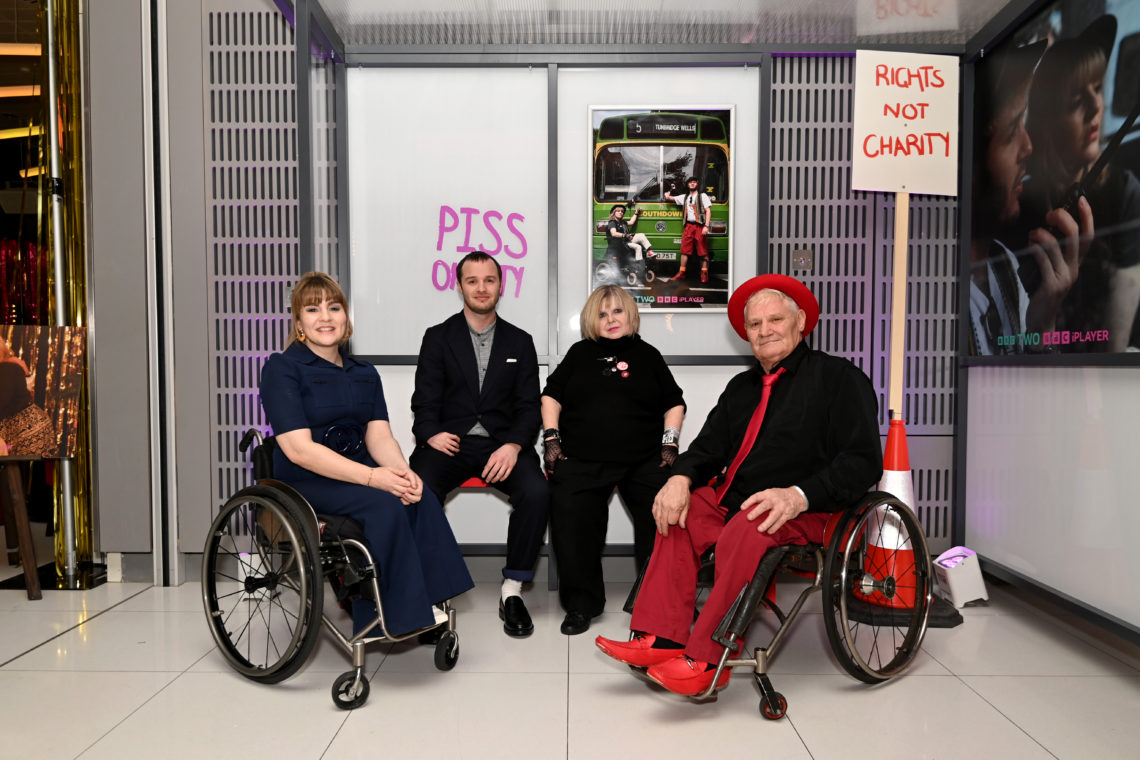


Then Barbara Met Alan is an hour-long BBC docudrama that recounts the actions of Barbara Lisicki and Alan Holdsworth, two disability activists during the 90’s.
Lisicki and Holdsworth were the founders of DAN (Disabled People’s Direct Action Network), which led protests for disabled people’s civil rights. The group eventually made waves which led to the Disability Discrimination Act of 1995.
The drama opens with Lisicki writing ‘p**s on pity’ on a bus stop; a phrase which stood to be the movement’s slogan. As Lisicki, who uses a wheelchair, moves about the world, the audience comes to see the everyday struggles that she goes through. It is the simple things such as cafes not being wheelchair accessible, or there being no ramps on trains and buses. Things that ablebodied folks take for granted.
DAN protested against ITV’s charity telethons, with Lisicki stating, ‘Charity makes us seem like passive victims.’ Throughout the film, DAN protesters are seen shouting ‘rights, not charity.’ After two years of protesting the telethons, ITV quietly ended them.
As well as showing how civil unrest brought about actual change, Then Barbara Met Alan also details how Lisicki and Holdsworth met and subsequently developed a relationship. The two have a child, Jasia, together. However, the couple ultimately separated, after the pressures of the movement took its toll.
At the end of the docudrama, the real people behind the movement are seen gathered on a bus together with the actors who portrayed them.
The docudrama has been well recieved by audiences. It has a 7.7/10 from IMDb audiences and recieved a perfect 5 stars from Jack Seale writing for The Guardian.
One viewer wrote, ‘Wittily written by Jack Throne and Genevieve Barr, with plenty of raucous action. [It] is as much a moving love story and wryly amusing sitcom, as it is an emotionally charged chronically of a small revolution.’