

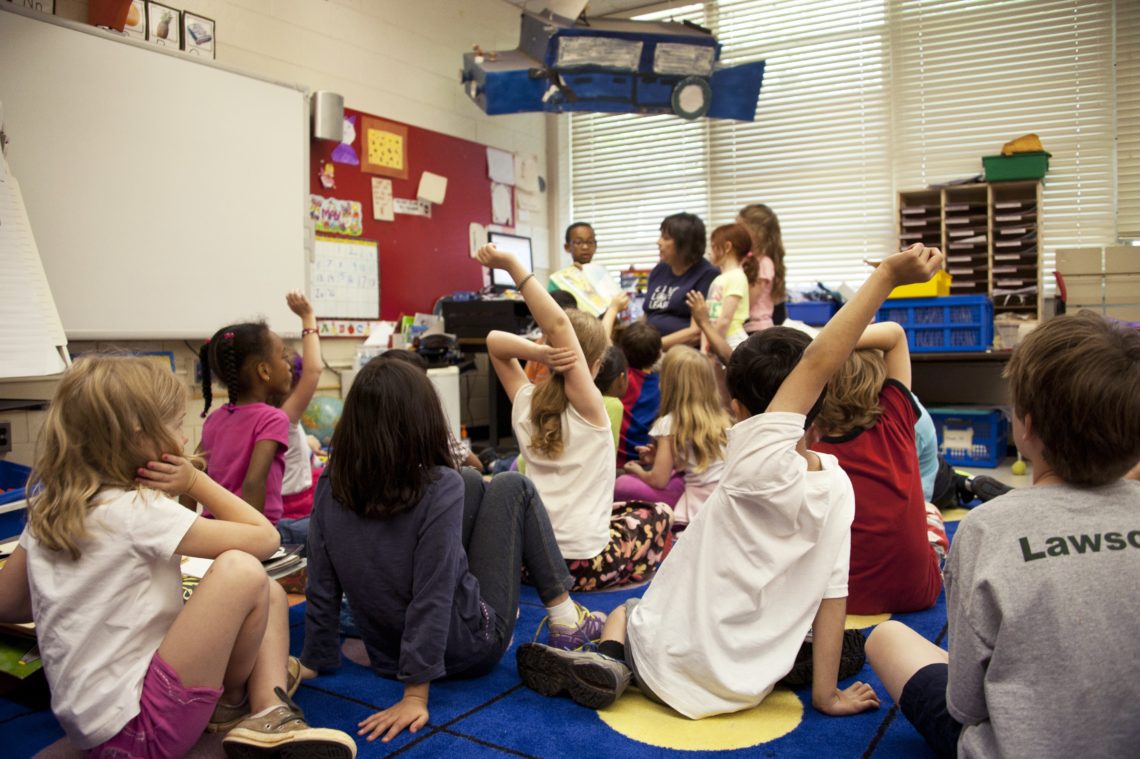


The government has launched a new programme that will see primary school pupils encouraged to think about future careers.
Pupils will take part in lessons linked in age-appropriate ways to different careers, training, and skills. The programme aims to bring learning alive and inspire pupils about the world of work and will provide them with opportunities to meet employers from a range of industries.
Based on evidence that shows that children begin forming ideas about their future as they start primary school, the programme will run through to 2025.
The initiative, coordinated by The Careers & Enterprise Company (CEC), will bring together primary schools in local areas as well as provide teachers with training delivered by Teach First.

Robert Halfon, Minister for Skills, Apprenticeships and Higher Education said that in order to deliver the future workforce that “this country needs,” it is essential that careers advice and work experience “helps young people from all backgrounds to climb the ladder of opportunity.”
How Many Primary School Children Will Get Careers Support?
Halfon stated: “The changes we are making to boost our careers programme will raise ambitions from an early age for thousands of children in primary schools across the country, while providing opportunities to unlock talent, think about skills, engage with employers and discover different workplaces.“
The scheme will be rolled out across 55 disadvantaged areas of the country where school outcomes “are the weakest and have been for some time.”
More than 600,000 pupils in over 2,200 primary schools will be supported by the programme which will give them the “kick start they need to boost their ambitions.”
According to Gov.UK, the scheme is backed by £2.6 million.
Oli de Botton, CEO of CEC, said it is important to inspire young people about their future, which involves “raising their sights and dispelling stereotypes.”
“Our new primary programme will bring careers inspiration to children early in their school life by connecting them with role models and showing them how different subjects relate to jobs,” de Botton said.
Older pupils will also benefit from further career advice. A change in law means that all year 8-13 pupils will have at least six opportunities to meet a range of providers of technical education.
Read next: Are More Train Strikes Planned For February 2023?