

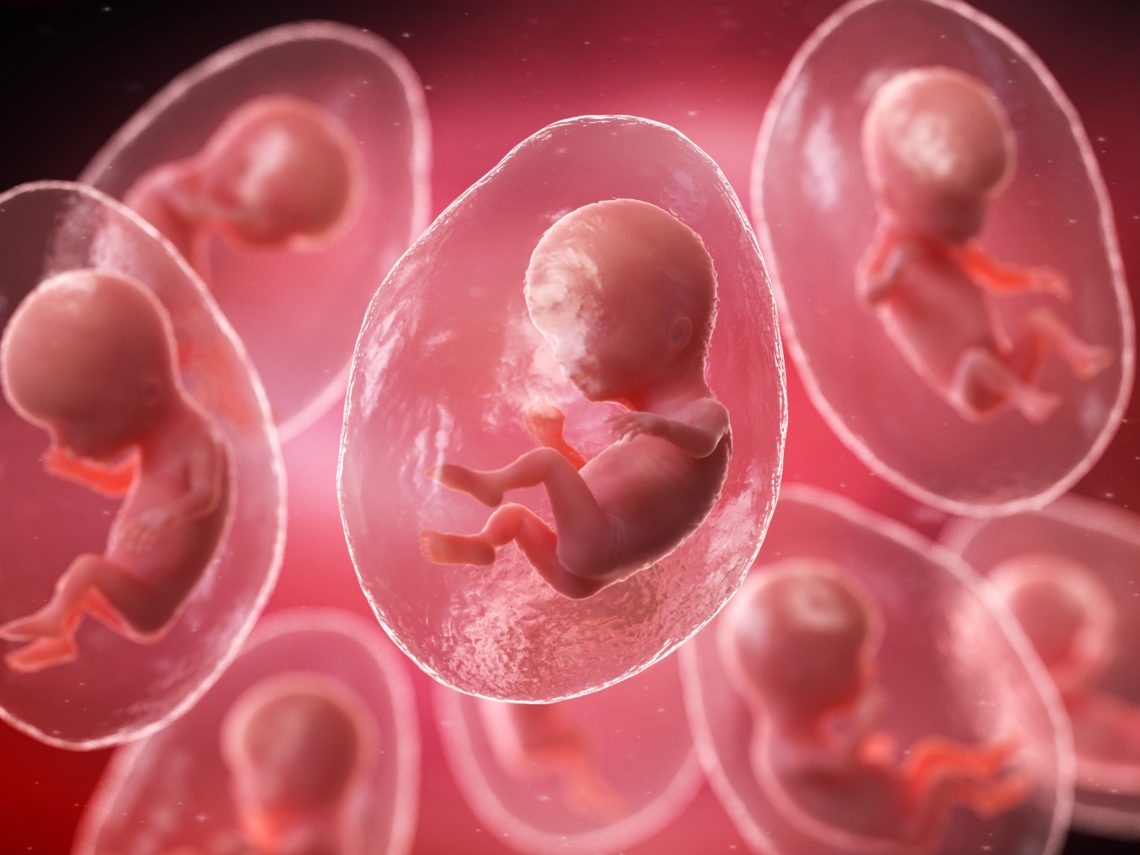


People have been confused after a video of an artificial womb facility has gone viral. The internet has gone mad over AI generators over the last couple of weeks, but this may be a step too far. Now, we’re all wondering if EctoLife is real.
We’ve all been consumed by artificial intelligence over the last few weeks, with Instagram in particular seeing a lot of new AI profile pictures. However, a new viral video may have taken it a tad new far. After people saw a video of what looked to be an artificial womb facility, there were questions about whether EctoLife was real or not.
Is EctoLife Real?
Although the futuristic video looks real, EctoLife is actually fake.
The video comes from producer and filmmaker Hashem Al Ghaili who is based in Berlin. Hashem has a background in molecular biology which he uses to imagine concepts for the future.
“Hashem uses his knowledge and passion for science to educate the public through social media and video content.”
The filmmaker has a clear interest in sci-fi and has made multiple films about the genre, winning multiple awards and gaining millions of views. His Facebook page, Science Nature has over 33 million followers.
His latest project, EctoLife was a video released on YouTube which was quickly shared on social media. Thousands of people have now seen the video and thought it to be real.
The video shows thousands of rows of babies inside artificial wombs in a massive scientific laboratory. The video goes on to say that EctoLife “is the perfect solution for women who have had their wombs surgically removed due to cancer or other complications.”
Whilst a facility like this isn’t real, some scientists believe that a system like EctoLife isn’t beyond imagination.
Scientists Believe The EctoLife Artificial Womb Could Be Real
Professor Joyce Harper of UCL told HuffPost UK that facilities like EctoLife could be the future.
I have no doubt that at some point, most people will be produced by IVF. And that this [EctoLife] would be a possibility. In science, I think you should never say never. If you just think of the last 50 years and what we’ve achieved that you would never have thought of. I’m quite old, so I remember watching Star Trek, where they were doing video calls, and you know, I never thought I’d be video calling my kids on FaceTime.”
The professor goes on to say that currently, babies can survive outside of the womb for about 20 weeks. Even the first four weeks of gestation can be completed in an IVF before the embryo is transferred to the womb.
“A pregnancy is normally 40 weeks and over half of it now can be done in the neonatal unit,” she says. So really, it’s under 20 weeks [of gestation time], that scientists have got to figure out how to do safely. It’s not really that far away.”
So, theoretically, everything EctoLife is proposing could one day be real. The more difficult part is the early organ generation in the first 12 weeks. What must also be considered is the ethical side to it. However, these are all issues that we are still far from needing to answer yet.
The day that an artificial womb facility like EctoLife is real is still a way off, however, the mind-boggling creations of Hashem won’t necessarily be science fiction forever.